Title here
Summary here

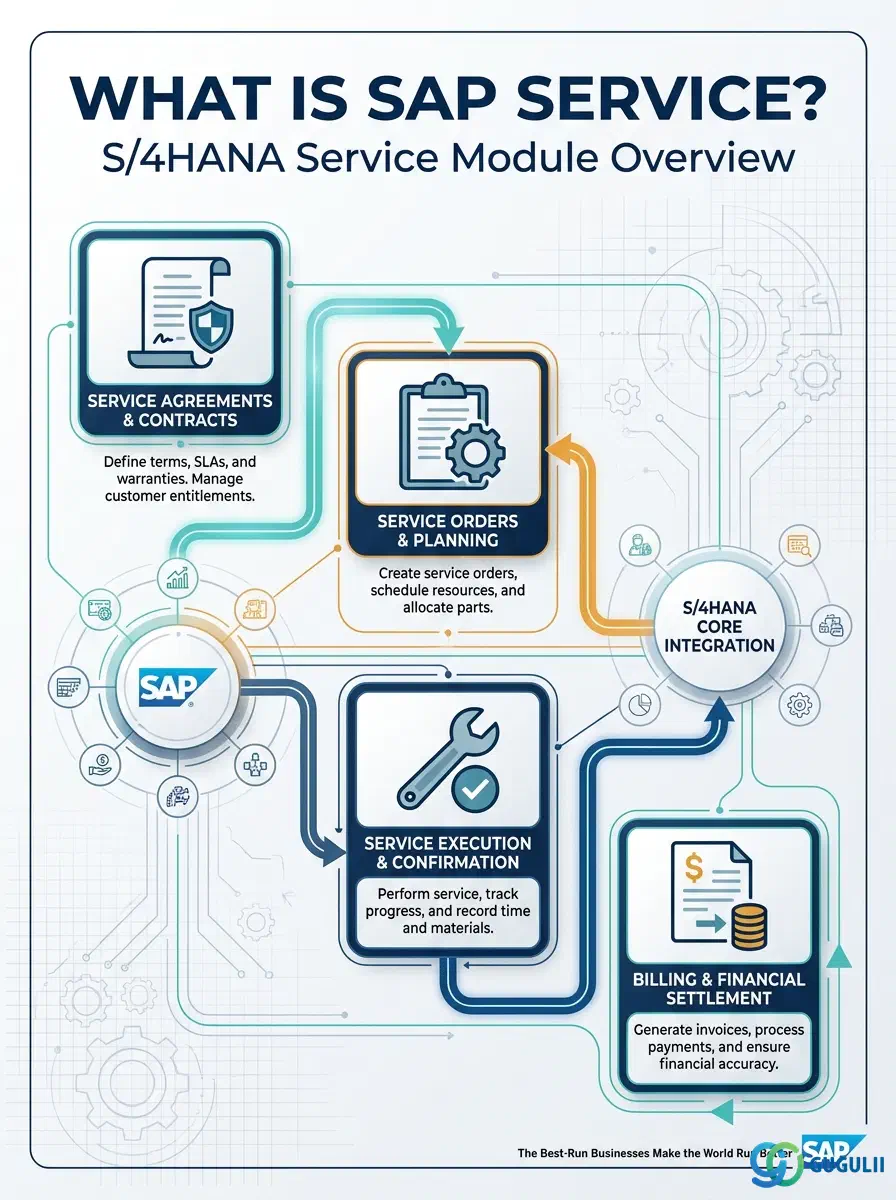
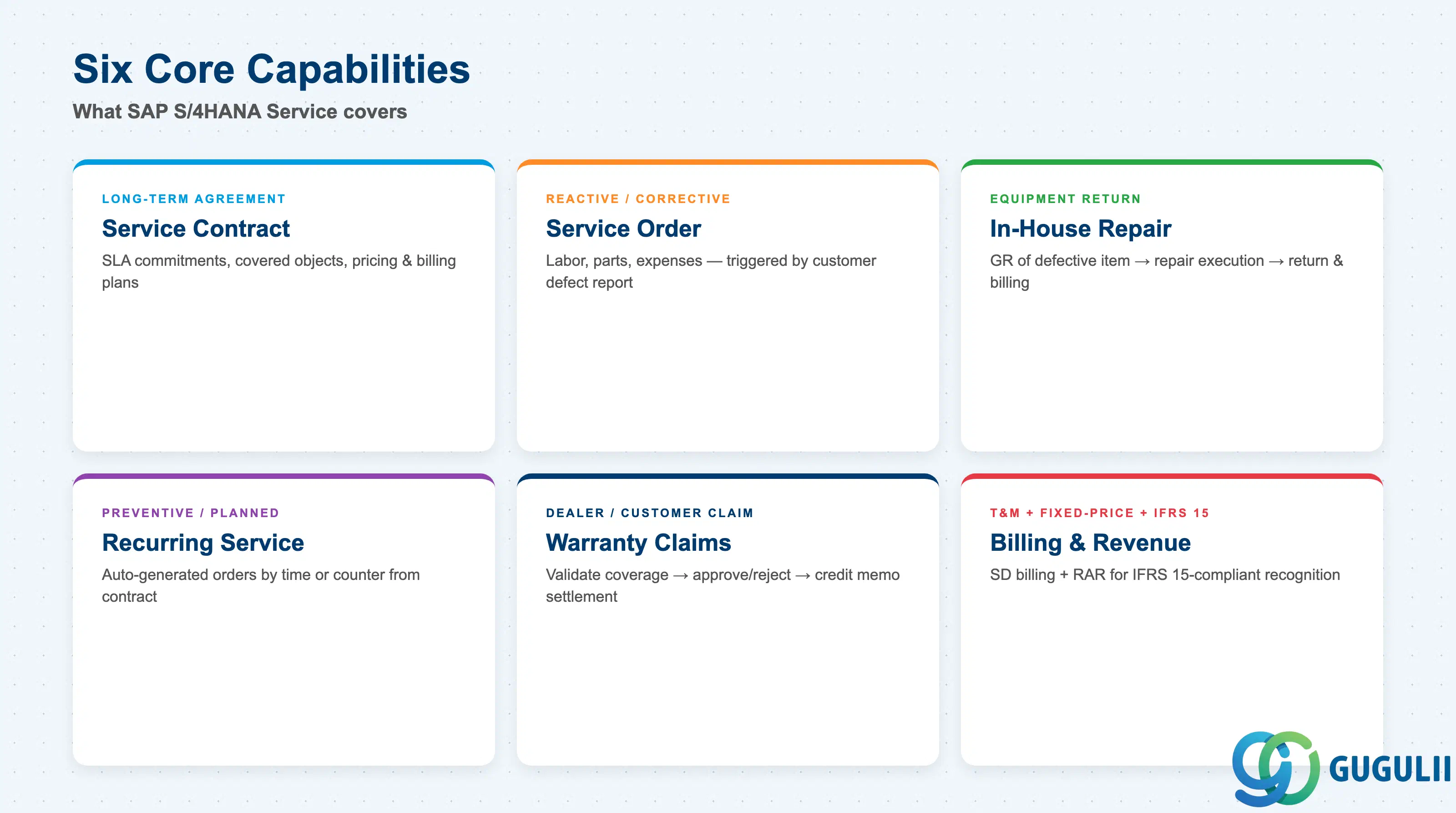
SAP S/4HANA Service is the strategic service management module in the S/4HANA suite. It manages the entire lifecycle of service delivery to external customers — from the initial service agreement through execution, confirmation, and billing. Unlike classic CS (Customer Service), which was built on the same object model as Plant Maintenance (PM), S/4HANA Service introduces independent business objects and a dedicated Fiori-native user interface.
The module addresses six core capability areas:
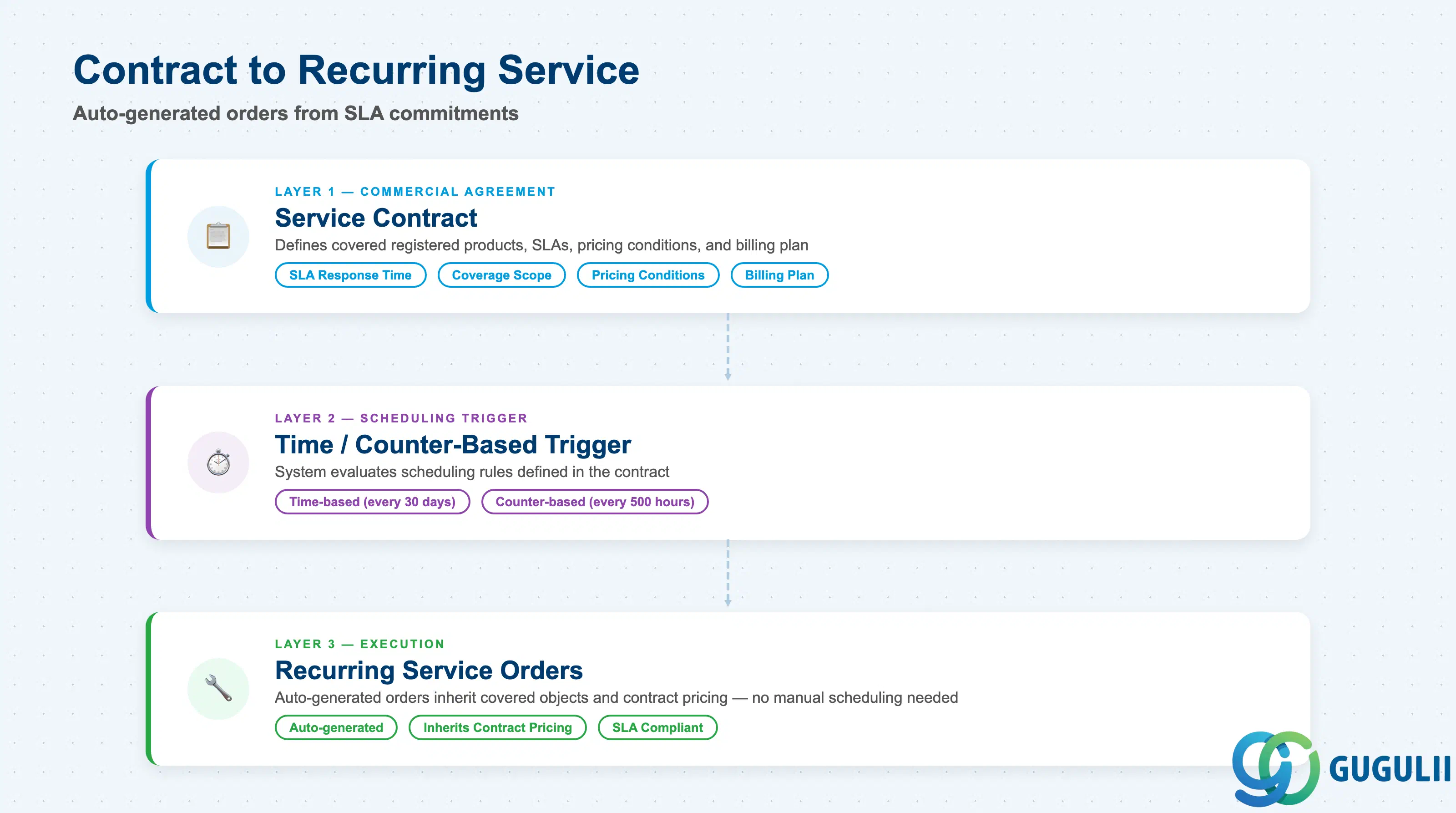
A Service Contract is a long-term agreement between a service provider and a customer. It defines the scope of covered services, the registered products under coverage, response time and SLA commitments, pricing conditions, and billing plans. Service Contracts serve as the commercial backbone of service operations — they determine what the customer is entitled to and at what cost.
Linked to contracts is Recurring Service (also called Preventive Service). When a contract requires periodic maintenance — for example, quarterly inspections or annual calibrations — the system automatically generates service orders at defined intervals. These intervals can be time-based (every 30 days) or counter-based (every 500 operating hours). Recurring service orders are created from the contract and inherit the relevant covered objects and pricing. This eliminates manual scheduling and ensures SLA compliance on recurring obligations.
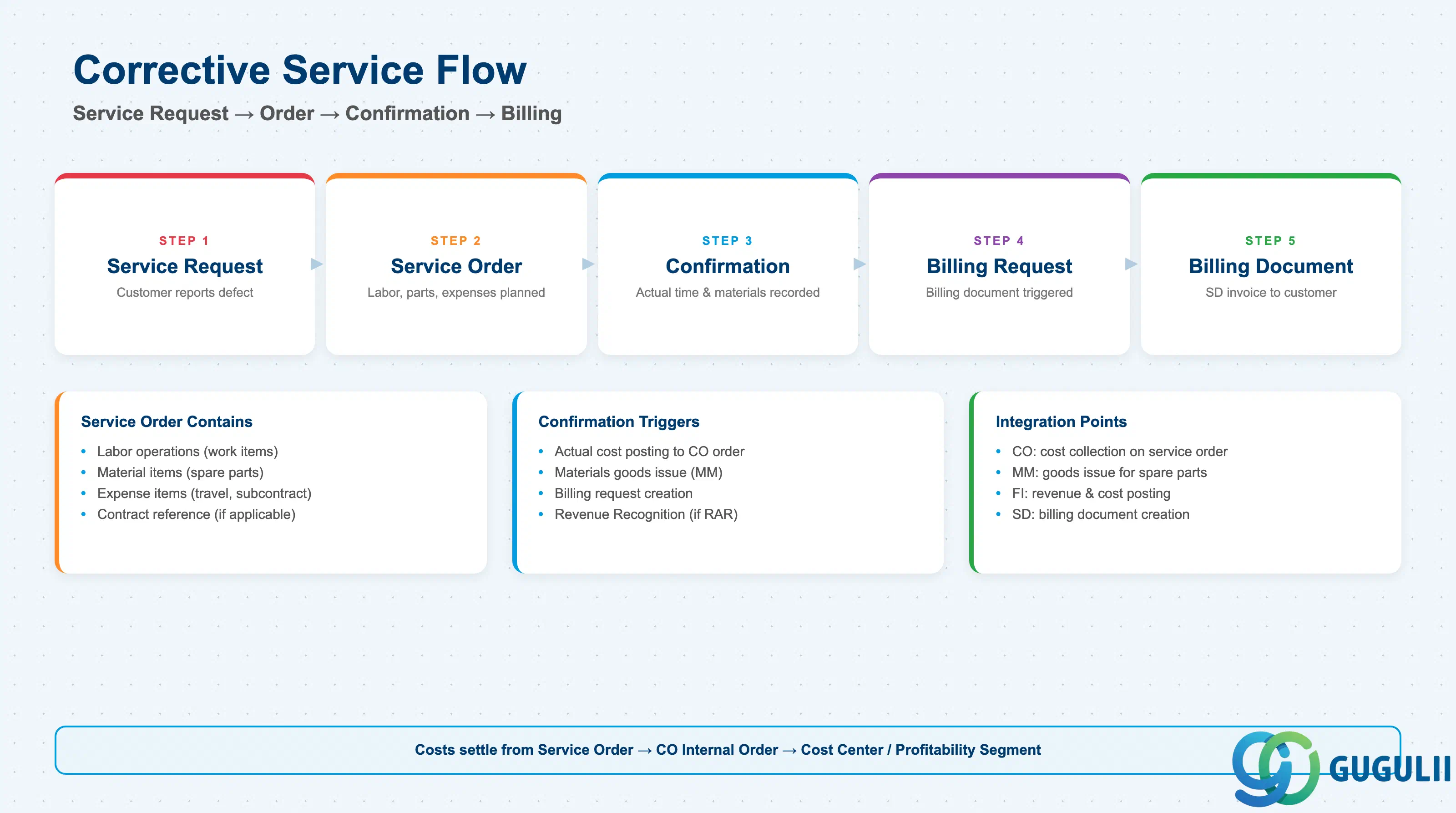
A Service Order is the primary execution document for corrective (reactive) service. When a customer reports a breakdown or malfunction, a service order is created to plan and document the service work. The service order contains:
The flow from service request to billing is:
Service Request → Service Order → Service Confirmation → Billing Request → Billing Document
Service orders collect costs via CO internal orders. Upon confirmation and billing, actual costs settle to the relevant CO objects, and revenue posts to FI.
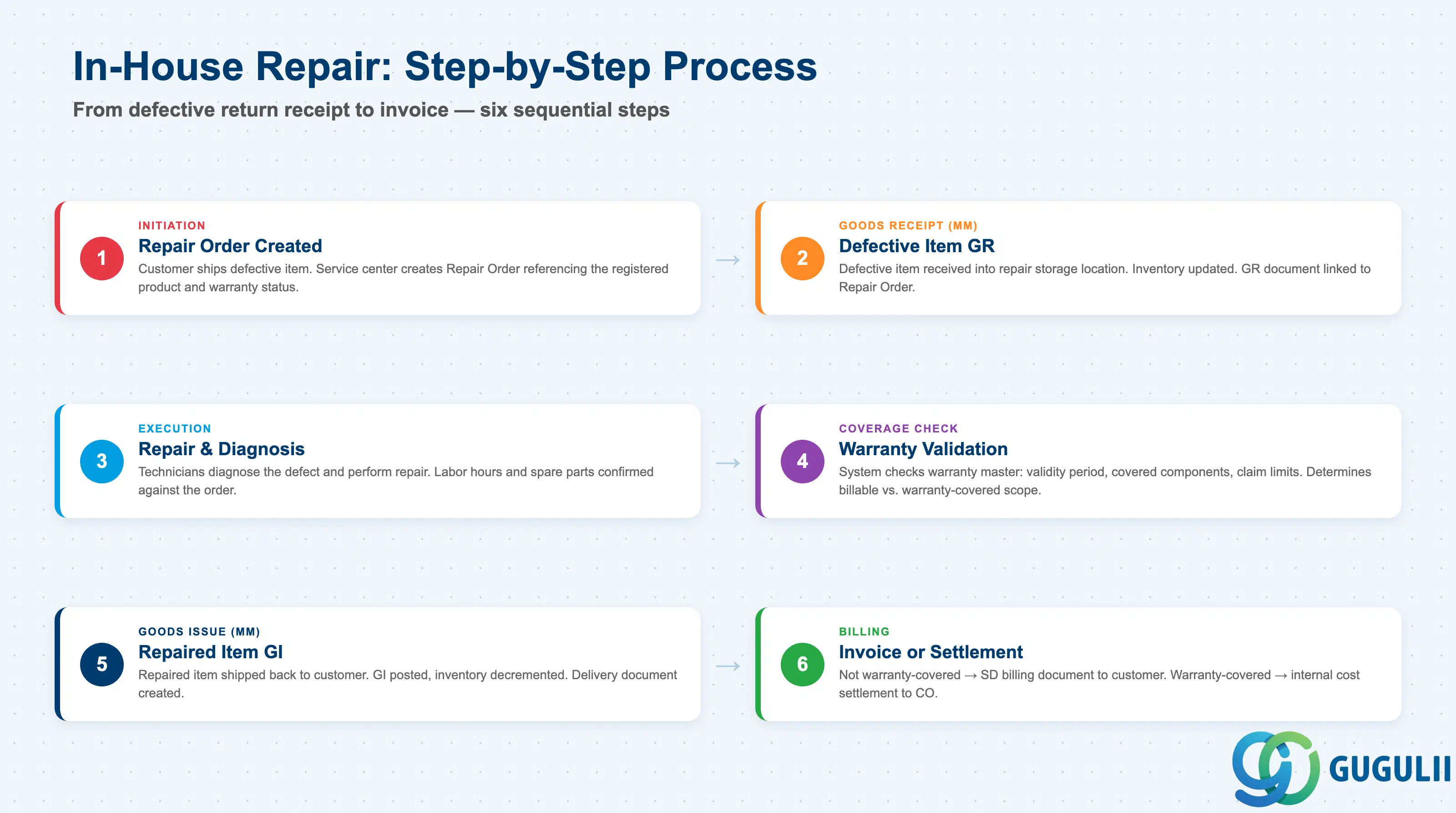
In-House Repair (IHR) covers the scenario where a customer returns defective equipment to the service center for repair. This is a distinct business process from field service and uses a dedicated Repair Order object.
The IHR process follows these steps:
IHR integrates tightly with MM for goods movements and with FI/CO for cost and revenue posting. For warranty-covered repairs, costs are settled internally rather than billed to the customer.
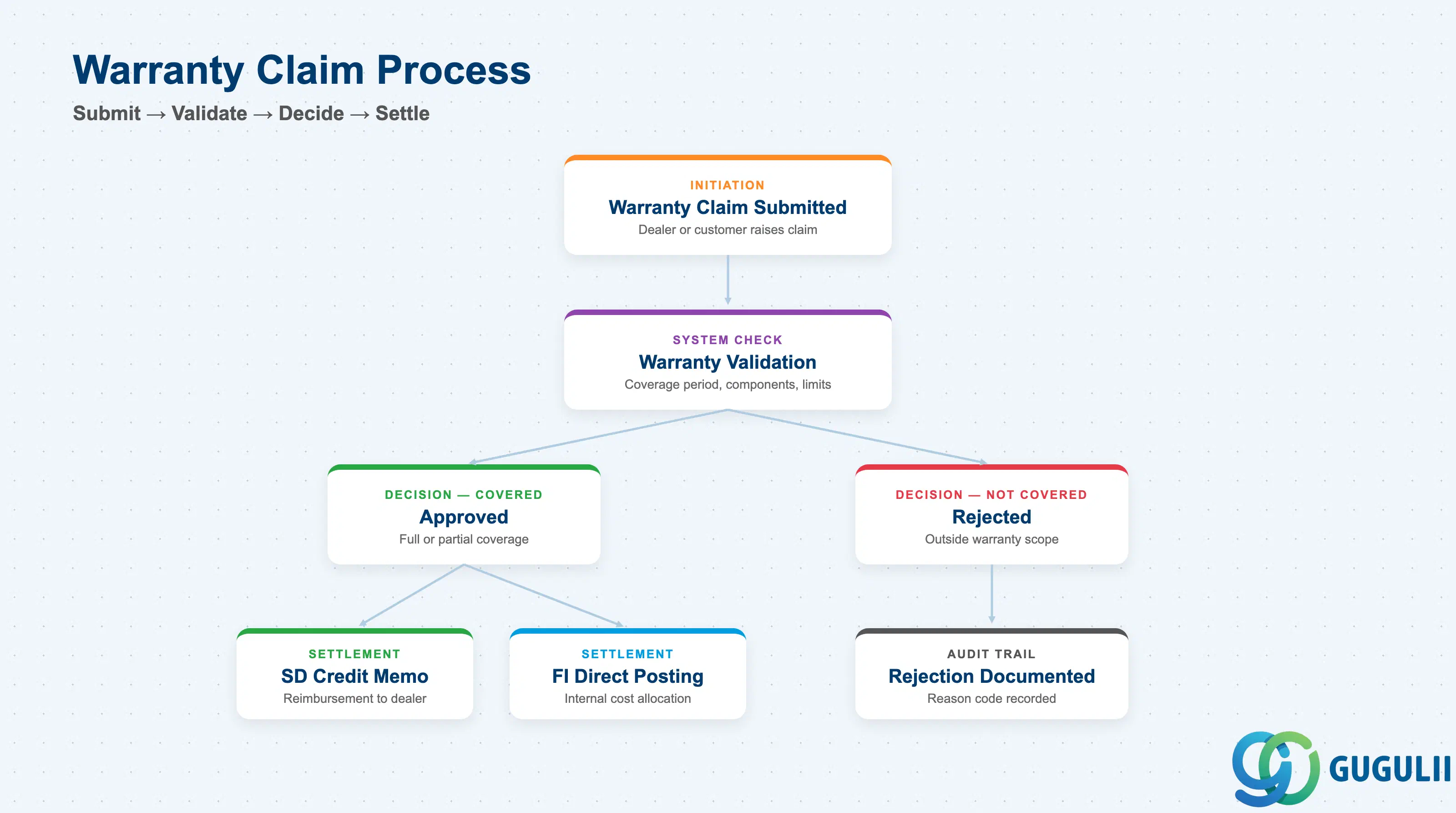
Warranty Claim Management handles claims submitted by dealers or end customers asserting that a defect is covered under a product or service warranty. The process involves:
Warranty master data in S/4HANA Service includes warranty objects (master warranties) and warranty counters (time-based or usage-based limits). Registered Products carry warranty assignments.
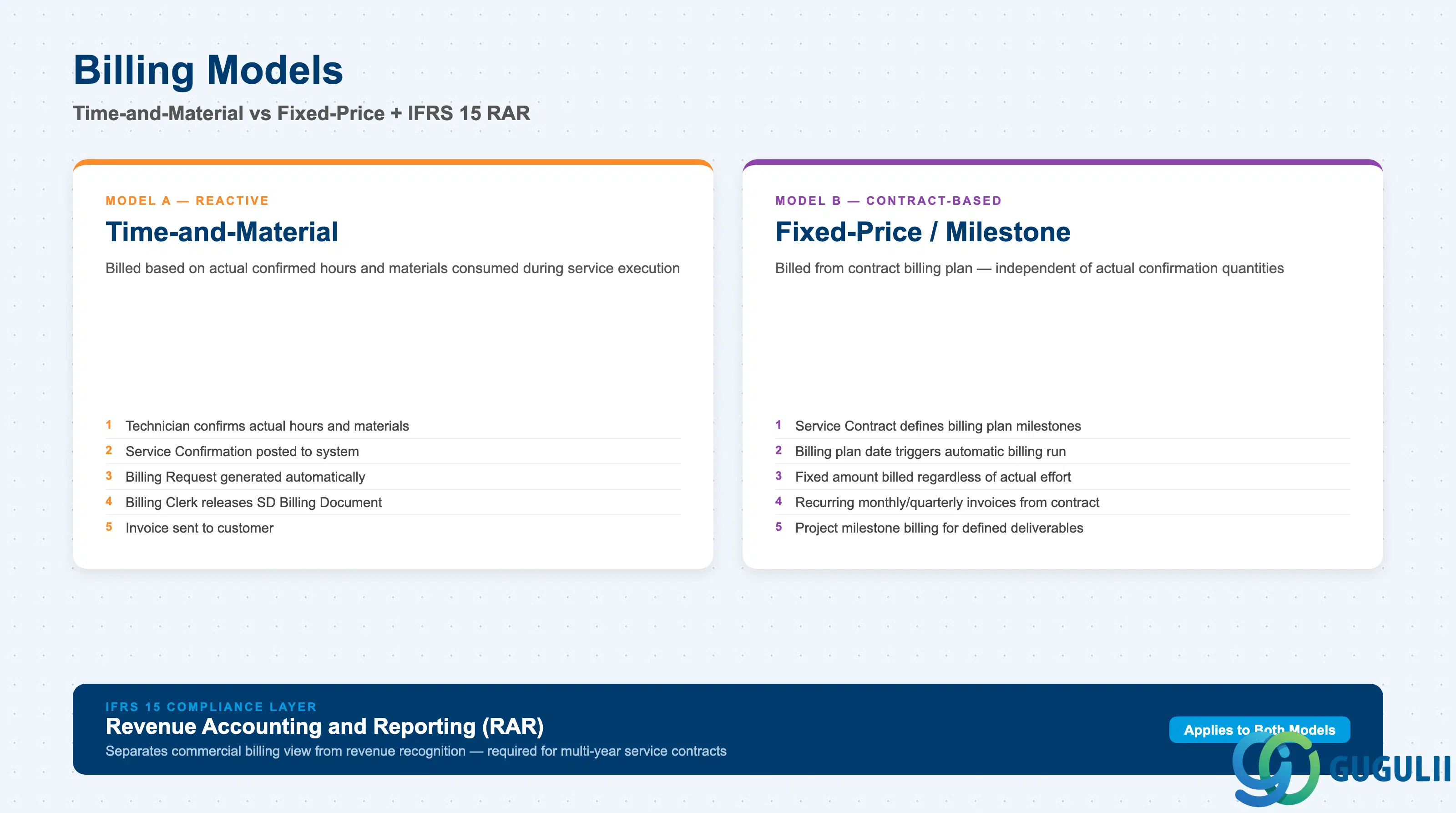
S/4HANA Service uses SD Billing as the billing engine, with service-specific billing documents generated from service confirmations or billing plans. Two primary billing models apply:
For companies subject to IFRS 15, S/4HANA Service integrates with Revenue Accounting and Reporting (RAR). RAR separates the commercial billing view (when the invoice is issued) from the revenue recognition view (when performance obligations are satisfied). This is particularly relevant for multi-year service contracts where revenue must be recognized over the contract duration rather than at billing.
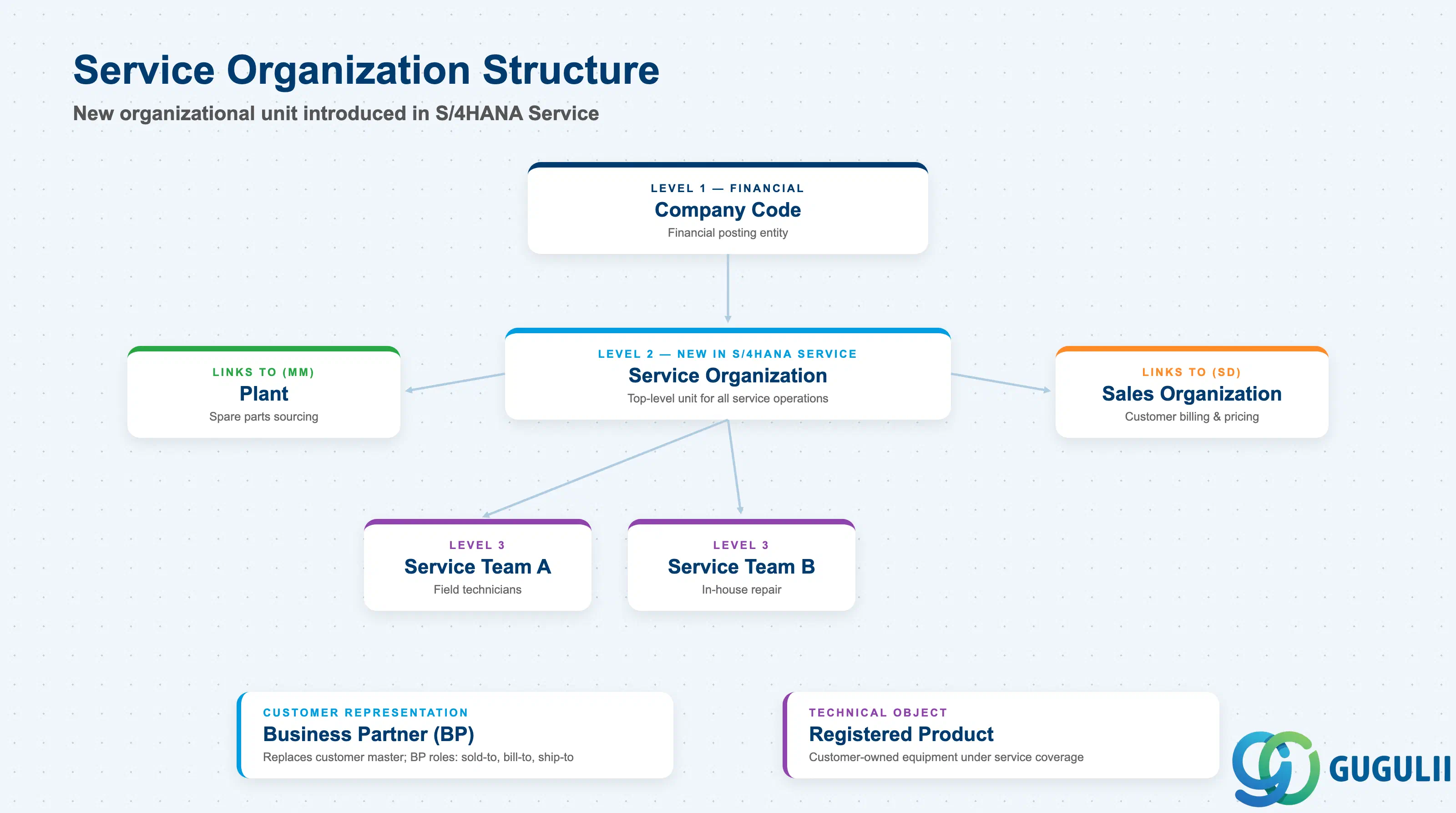
SAP S/4HANA Service introduces the Service Organization as a new organizational unit that did not exist in the legacy CS module. The Service Organization:
Within a Service Organization, Service Teams group technicians and resources. Teams are used for workload assignment and scheduling — a service order or service request can be assigned to a team, which then assigns individual resources.
Business Partner (BP) replaces the traditional customer master in service contexts. Consistent with S/4HANA’s Central Business Partner approach, all customer relationships in service (sold-to party, bill-to party, ship-to party) are represented as BP roles rather than separate customer master records.
Registered Products (also called “Individual Objects”) are the technical objects managed within S/4HANA Service. They represent specific equipment instances owned or operated by a customer and registered for service coverage. Registered Products are distinct from PM Equipment — PM Equipment manages company-internal assets; Registered Products manage customer-owned assets under service scope.
Note on CS to S/4HANA Service Transition: In the legacy CS module (ECC era), the Customer Service module shared transaction codes (IW21 for notifications, IW31 for service orders) and business object types with Plant Maintenance. There was no dedicated Service Organization — CS orders were organized under PM plants and business areas. S/4HANA Service breaks this dependency entirely: the Service Organization is the top-level organizational unit for service, and all service objects operate independently of PM’s organizational hierarchy. Consultants migrating from CS to S/4HANA Service must re-map all organizational assignments and re-evaluate master data structures during the requirements definition phase.
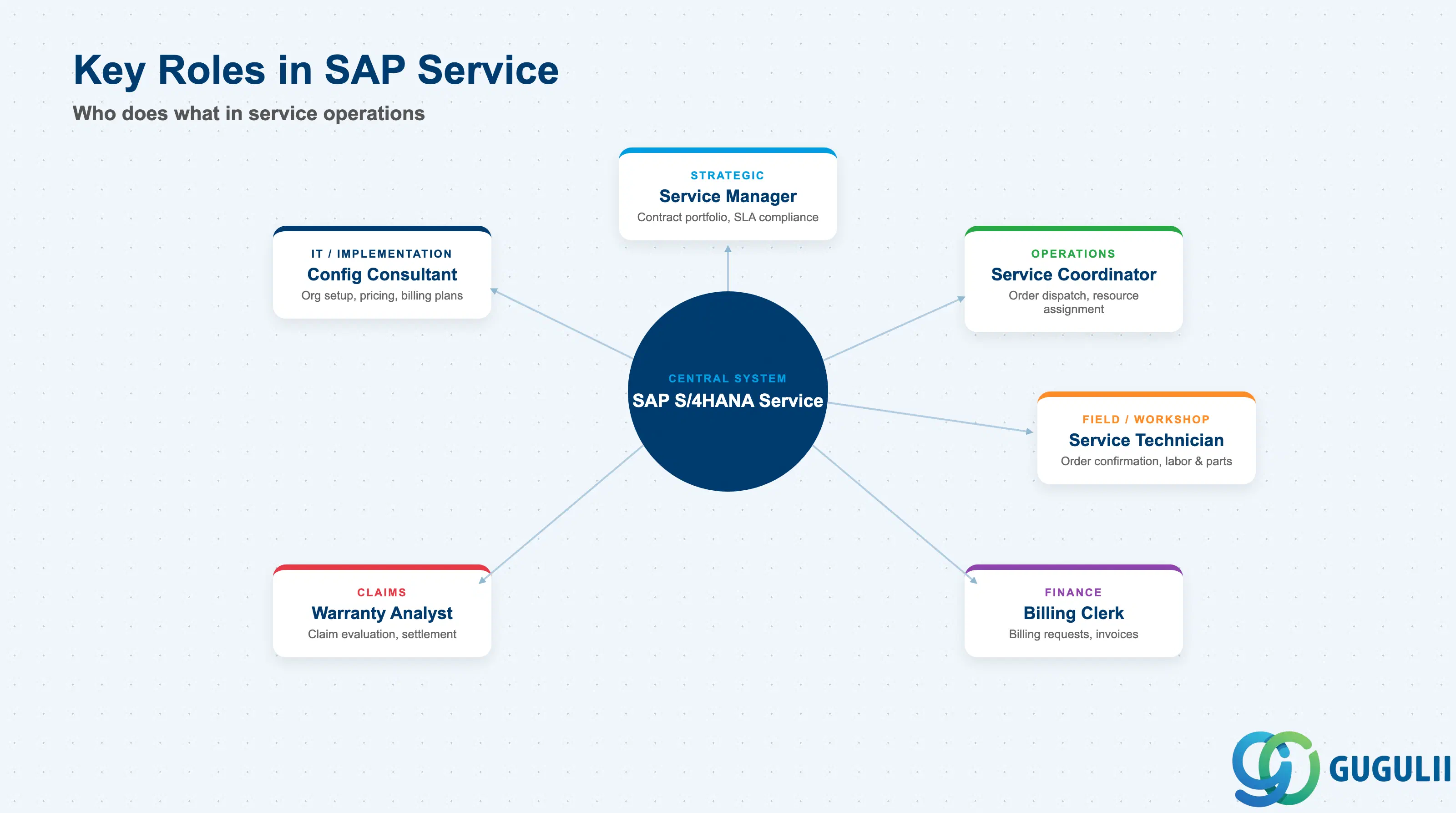
The following roles are relevant in SAP S/4HANA Service implementations:
| Role | Responsibilities in S/4HANA Service |
|---|---|
| Service Manager | Manages service contract portfolio, monitors SLA compliance, approves escalations |
| Service Coordinator | Creates and dispatches service orders, assigns resources/teams, tracks open orders |
| Service Technician | Confirms service orders (labor, materials), records defect findings, closes orders |
| Back-Office Billing Clerk | Processes billing requests, creates invoices, manages billing plan execution |
| Warranty Analyst | Evaluates warranty claims, validates coverage, approves/rejects claims, manages settlements |
| Service Configuration Consultant | Defines Service Organizations, service products, pricing conditions, and billing plan templates |
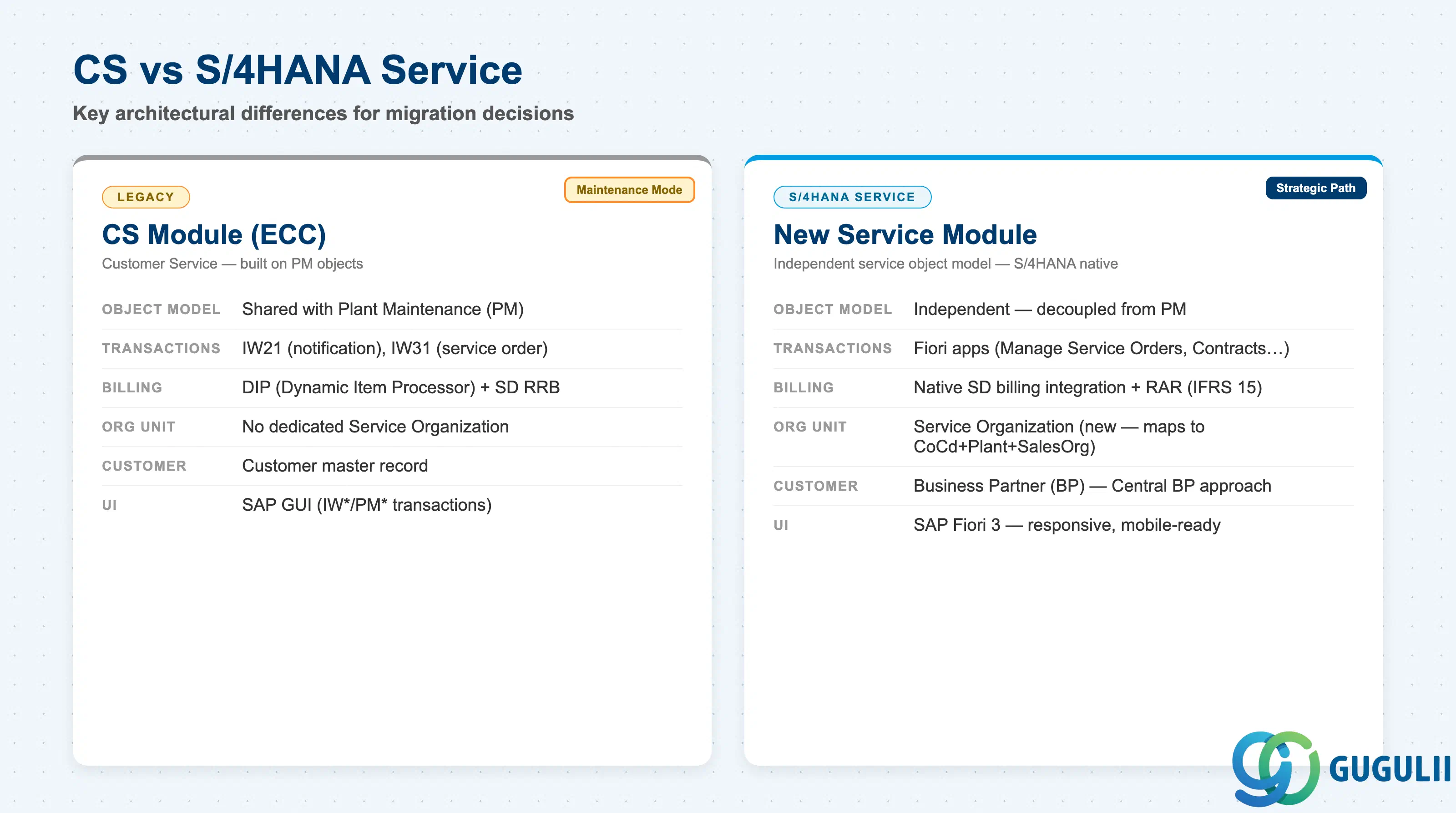
SAP S/4HANA Service represents a fundamental redesign of service management within the SAP ecosystem. The legacy Customer Service (CS) module, built on Plant Maintenance objects and shared transaction codes, has been replaced by a purpose-built service module with its own organizational structure (Service Organization), its own business objects (Service Contract, Service Order, In-House Repair Order, Warranty Claim), and native Fiori applications.
The six core capability areas — Service Contract and Recurring Service, Service Order (corrective maintenance), In-House Repair, Warranty Claim Management, and Billing/Revenue Recognition — cover the full range of service delivery scenarios from time-and-material field service to complex multi-year contracts with IFRS 15 revenue recognition.
For consultants and key users entering requirements definition for an S/4HANA Service implementation, the critical design decisions are:
Understanding these dimensions before configuration begins is what separates a successful implementation from a costly rework.
| ID | Category | Title |
|---|---|---|
| srv-001 | Overview | What is SAP Service? 📍 |
| ID | Category | Title |
|---|---|---|
| srv-a01 | Overview | SAP Service Master Data: Overview, Hierarchy & Relationships |
| srv-a03-01 | Master Data | SAP Service Product Master |
| srv-a04-01 | Master Data | SAP Spare Parts Master |
| srv-a03-02 | Master Data | SAP Service Pricing Condition |
| srv-a05-01 | Master Data | SAP Service Functional Location |
| srv-a05-02 | Master Data | SAP Service Equipment |
| srv-a05-03 | Master Data | SAP Service Bill of Material |
| srv-a06-01 | Master Data | SAP Service Service Contract Template |
| srv-a06-02 | Master Data | SAP Service Service Order Template |
| srv-a07-01 | Master Data | SAP Service Warranty Master |