Title here
Summary here

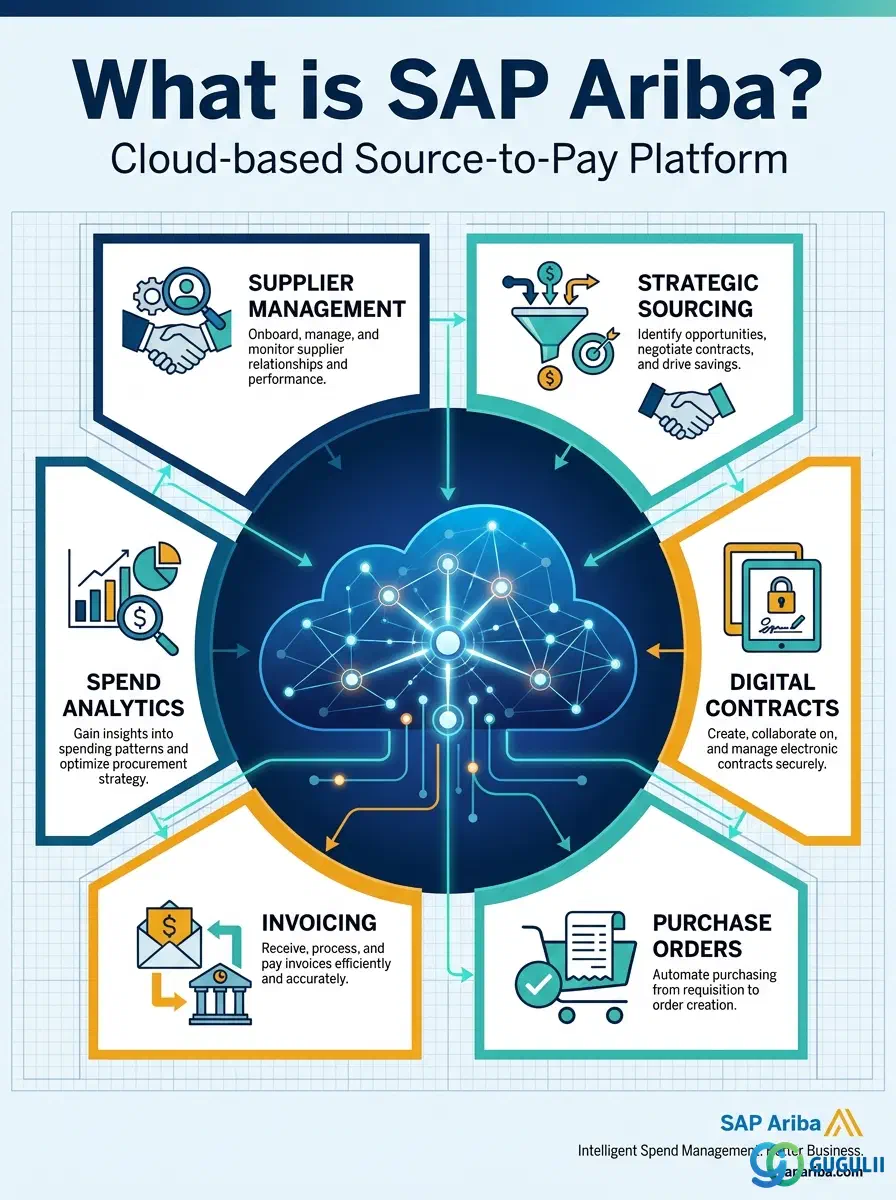
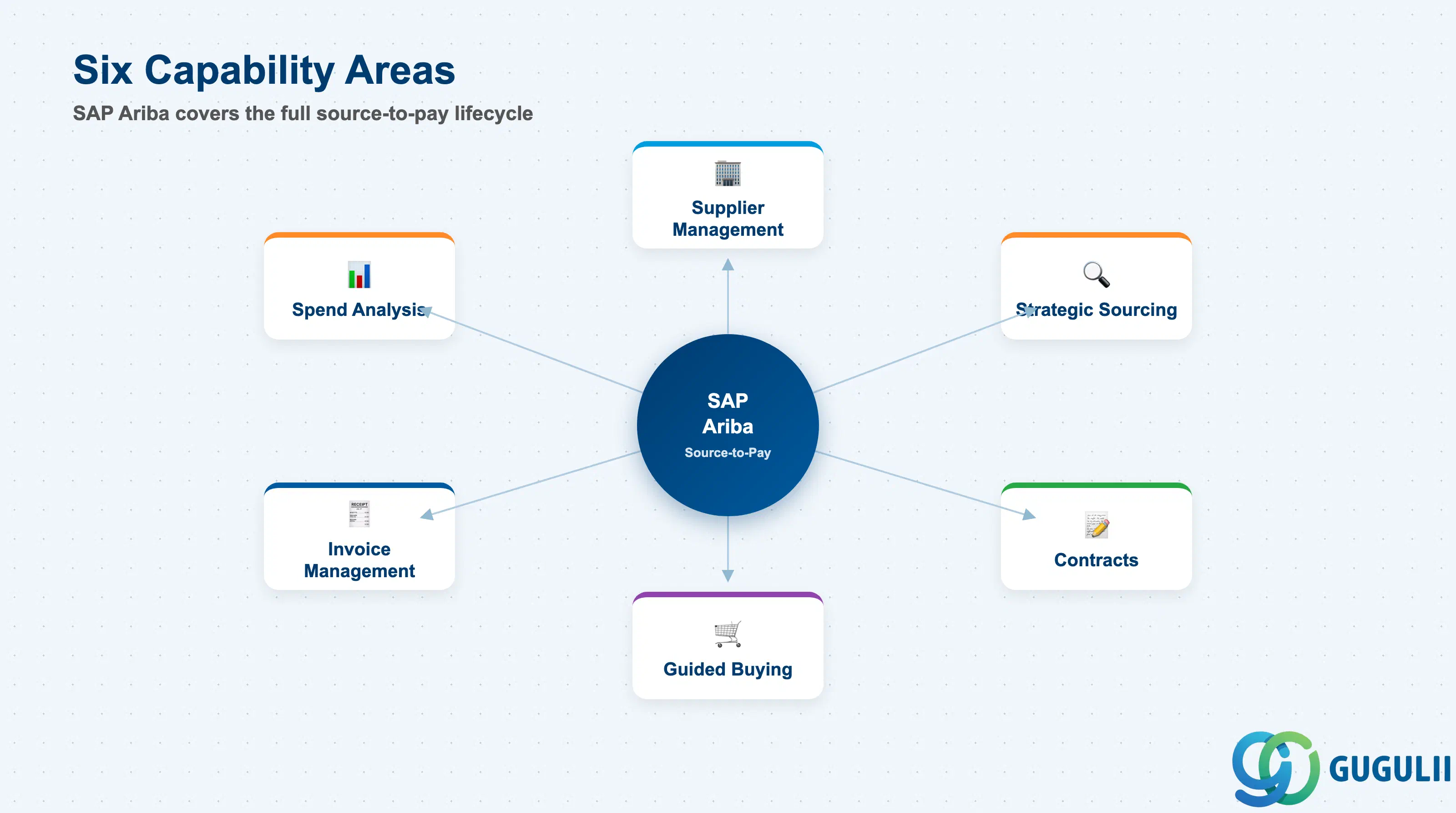
SAP Ariba is a cloud-native spend management platform that unifies the full source-to-pay lifecycle — from identifying the right suppliers and negotiating contracts, through raising purchase orders and processing invoices, to analyzing and optimizing overall spend. As of 2026, SAP is actively evolving the platform into “Next-Gen SAP Ariba,” an AI-native suite built on SAP Business Technology Platform (SAP BTP), with Joule AI embedded directly into procurement workflows.
The platform is organized around six core capability areas:
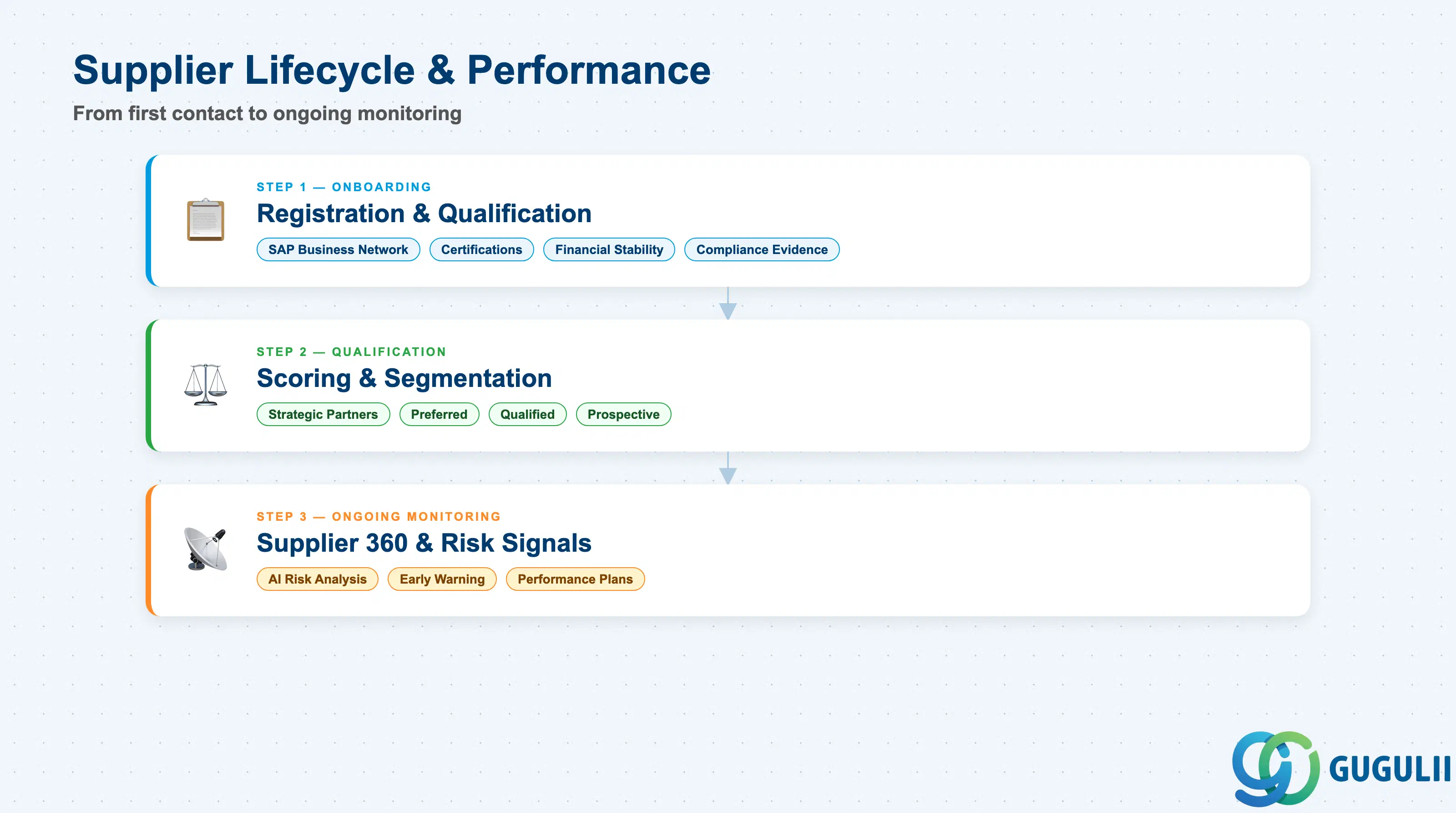
SAP Ariba Supplier Lifecycle and Performance (SLP) manages the complete supplier relationship from first contact to ongoing performance review. Key stages are:
A separate sub-module, SAP Ariba Supplier Risk, focuses specifically on risk due diligence across the source-to-pay process.
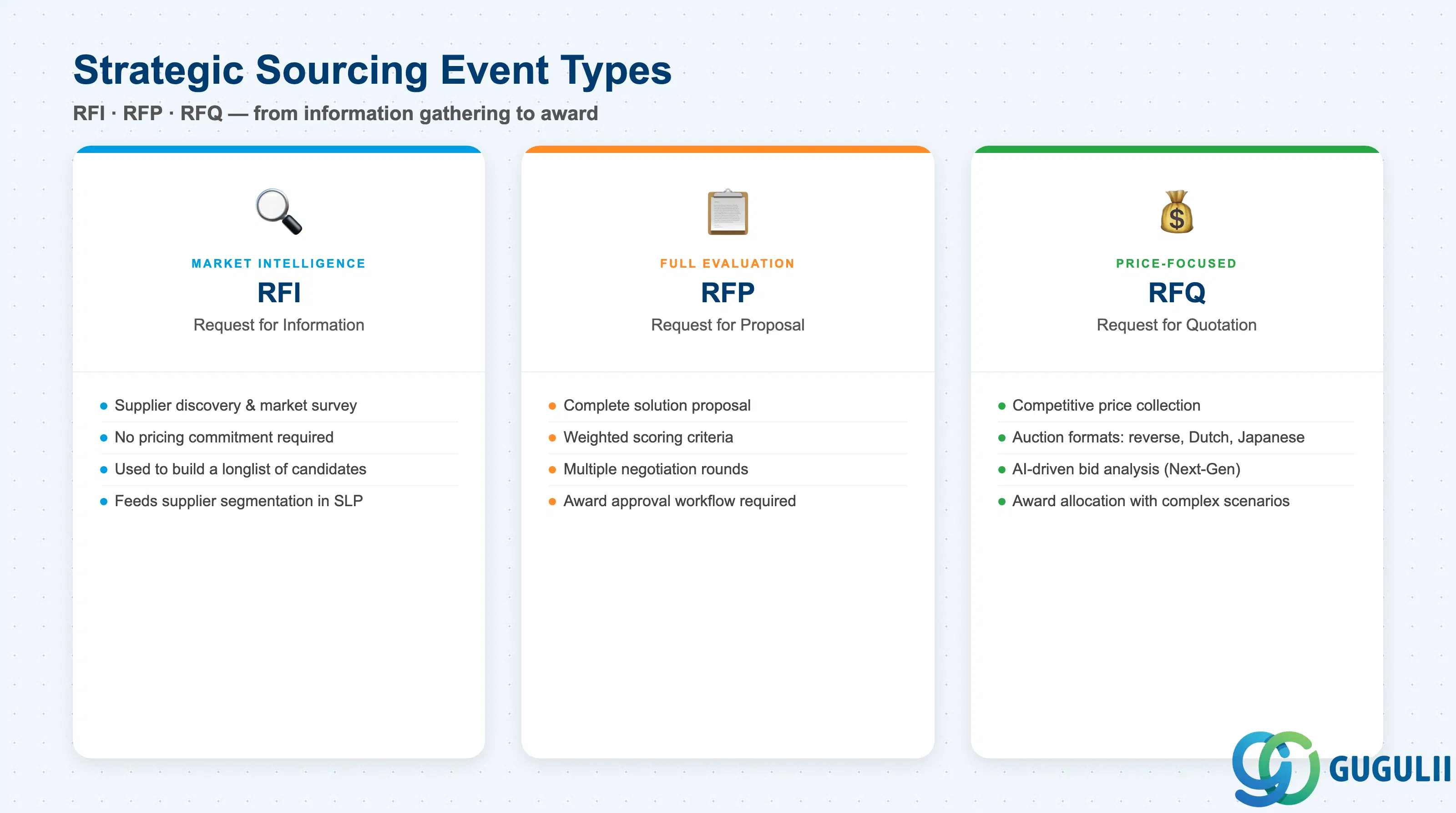
SAP Ariba Sourcing covers the full source-to-contract process for indirect, services, capital equipment, and direct spend. Key capabilities include:
Sourcing projects contain phases and tasks that support multiple rounds of negotiation. Award approval workflows are configurable by event type.
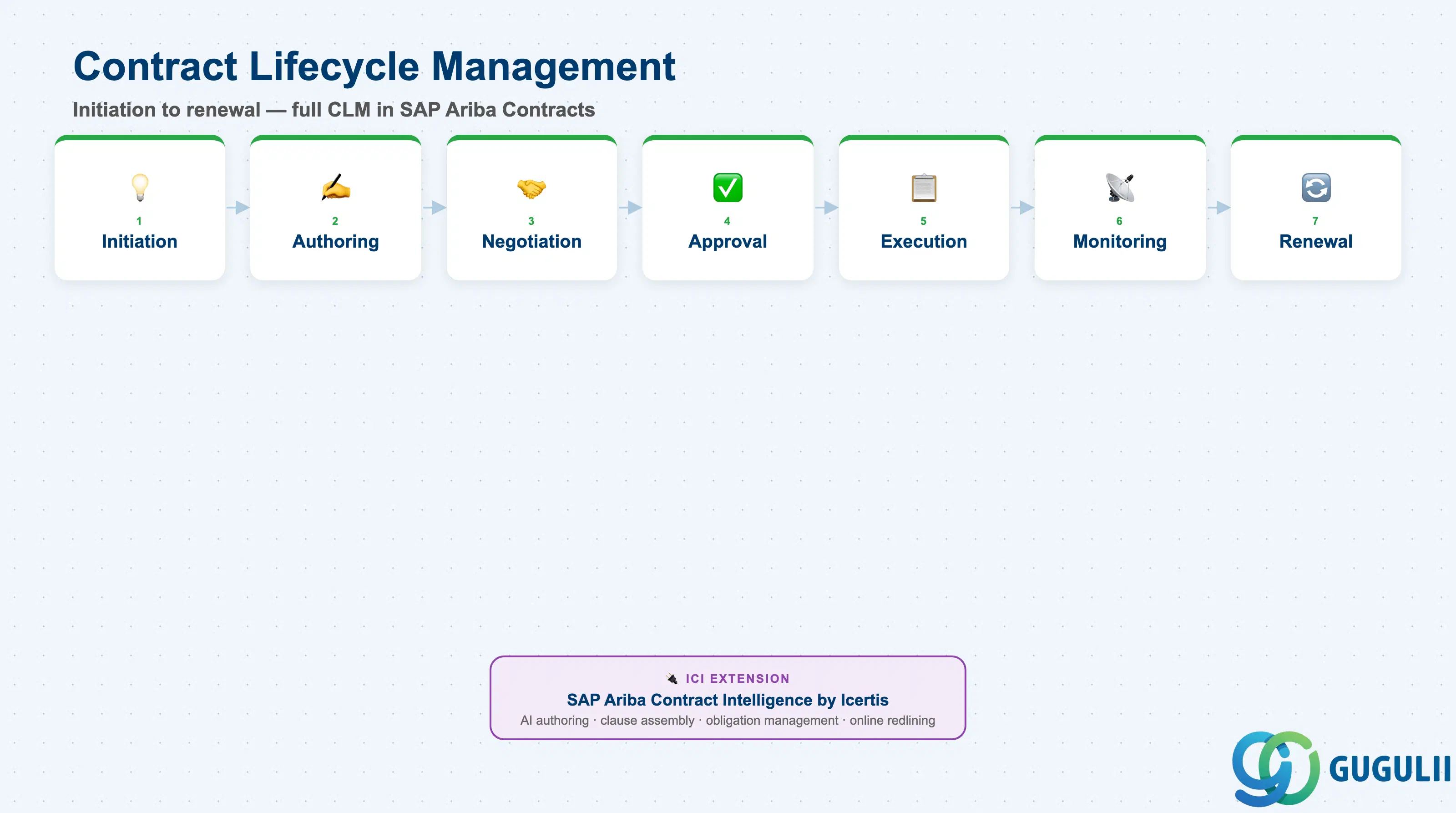
SAP Ariba Contracts covers the full contract lifecycle management (CLM) process:
For organizations requiring advanced CLM capabilities, SAP Ariba Contract Intelligence by Icertis (ICI) is an SAP solution extension that adds AI-assisted contract creation, intelligent clause assembly, online redlining, and obligation management layered on top of core Ariba Contracts.
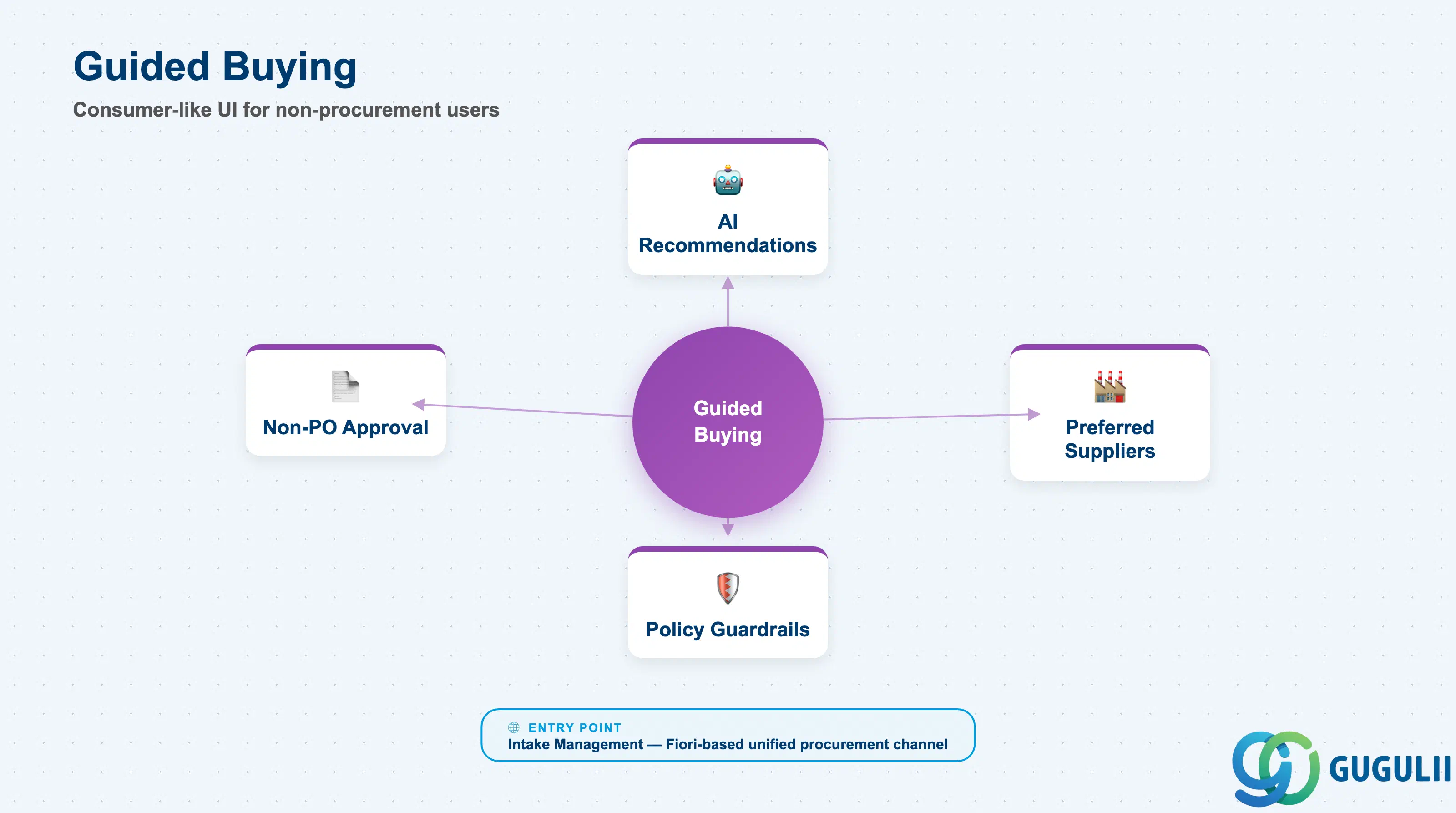
Guided Buying provides an AI-driven, consumer-like interface designed for non-procurement employees raising purchase requests. Key features include:
SAP Ariba Intake Management — now globally available as a single procurement entry point with an SAP Fiori-based UX — extends Guided Buying to cover all procurement request types through one standardized channel.
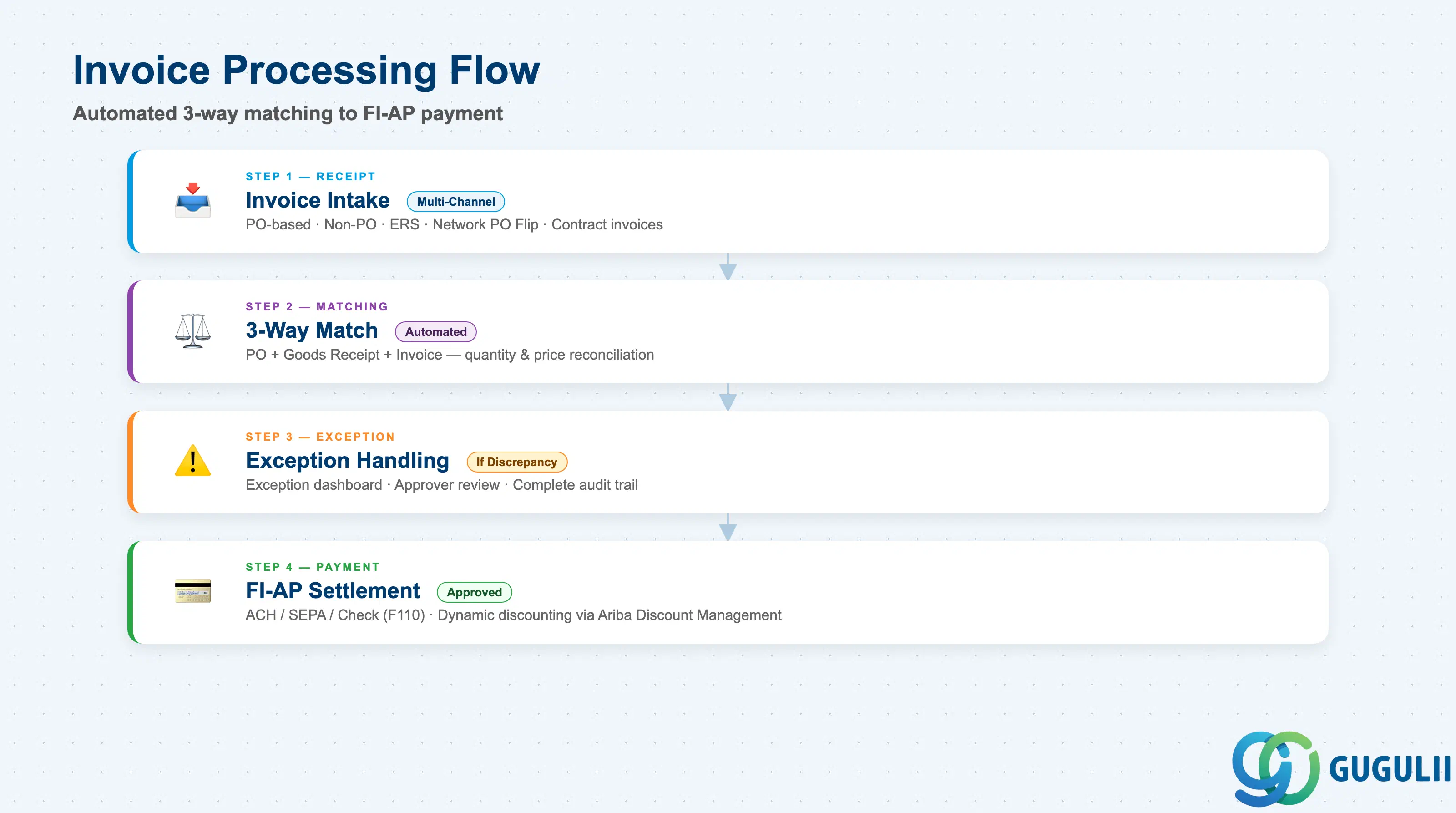
SAP Ariba Buying and Invoicing is the combined procure-to-pay module. Its invoice management capabilities handle multiple inbound document channels through a single interface:
Automated 3-way matching (PO, Goods Receipt, Invoice) drives exception-free processing. Tax validations and an exception dashboard with a complete audit trail support approvers. Approved invoices transfer to FI-AP in the connected ERP. Payment methods include ACH/SEPA, checks, and dynamic discounting via SAP Ariba Discount Management.
Next-Gen capabilities add intelligent fraud detection, agentic invoice creation, smart OCR, and AI invoice matching.
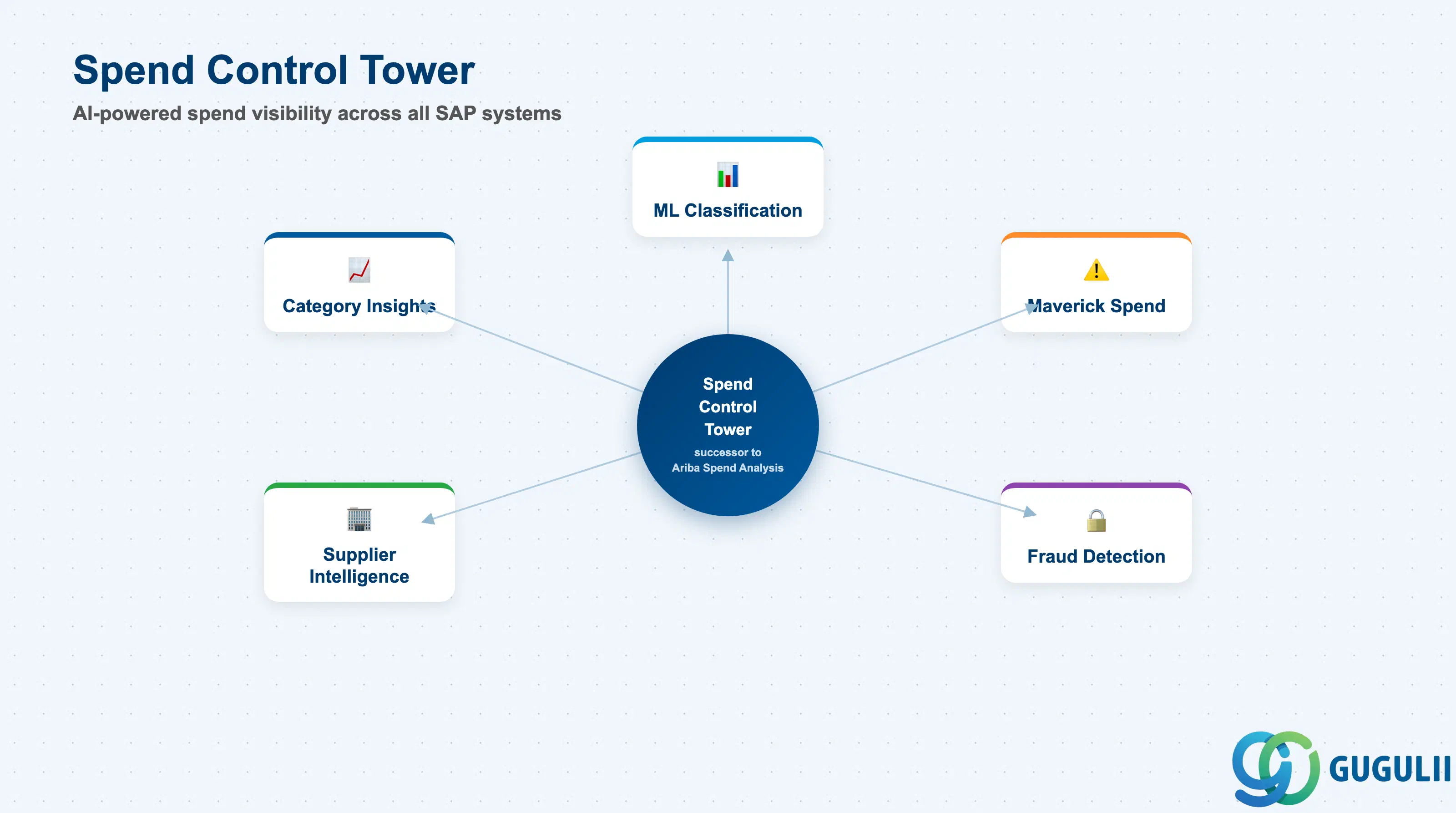
SAP Ariba Spend Analysis integrates machine learning, market intelligence, and analytics to provide a centralized view of organizational spend by supplier, buyer, category, and part number. Key capabilities include:
SAP Spend Control Tower is the successor product to SAP Ariba Spend Analysis, consolidating payment and supplier data with AI-powered spend classification and supplier enrichment across all SAP systems.
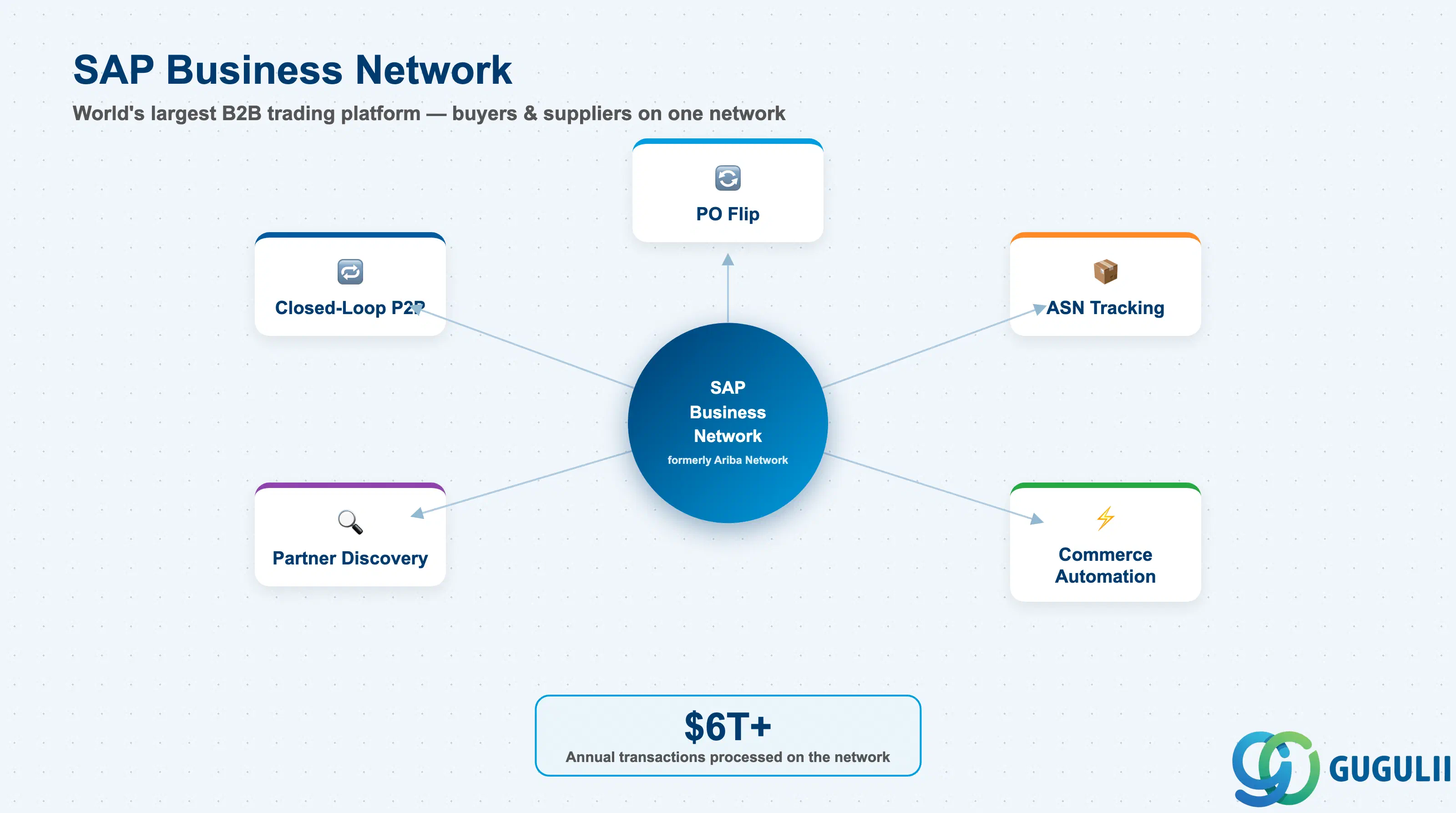
The Ariba Network is now branded SAP Business Network and operates as the world’s largest B2B trading partner platform, supporting over $6 trillion in annual transactions. It connects buyers and suppliers across sourcing, procurement, supply chain collaboration, and logistics.
Key capabilities of SAP Business Network:
For buyers, the Network is the backbone of automated P2P execution. For suppliers, it is a single connection point that replaces point-to-point EDI integrations with hundreds of individual trading partners.
SAP Ariba covers two complementary end-to-end processes. Together they form the Source-to-Pay (S2P) lifecycle:
S2P = Source-to-Contract (S2C) + Procure-to-Pay (P2P)
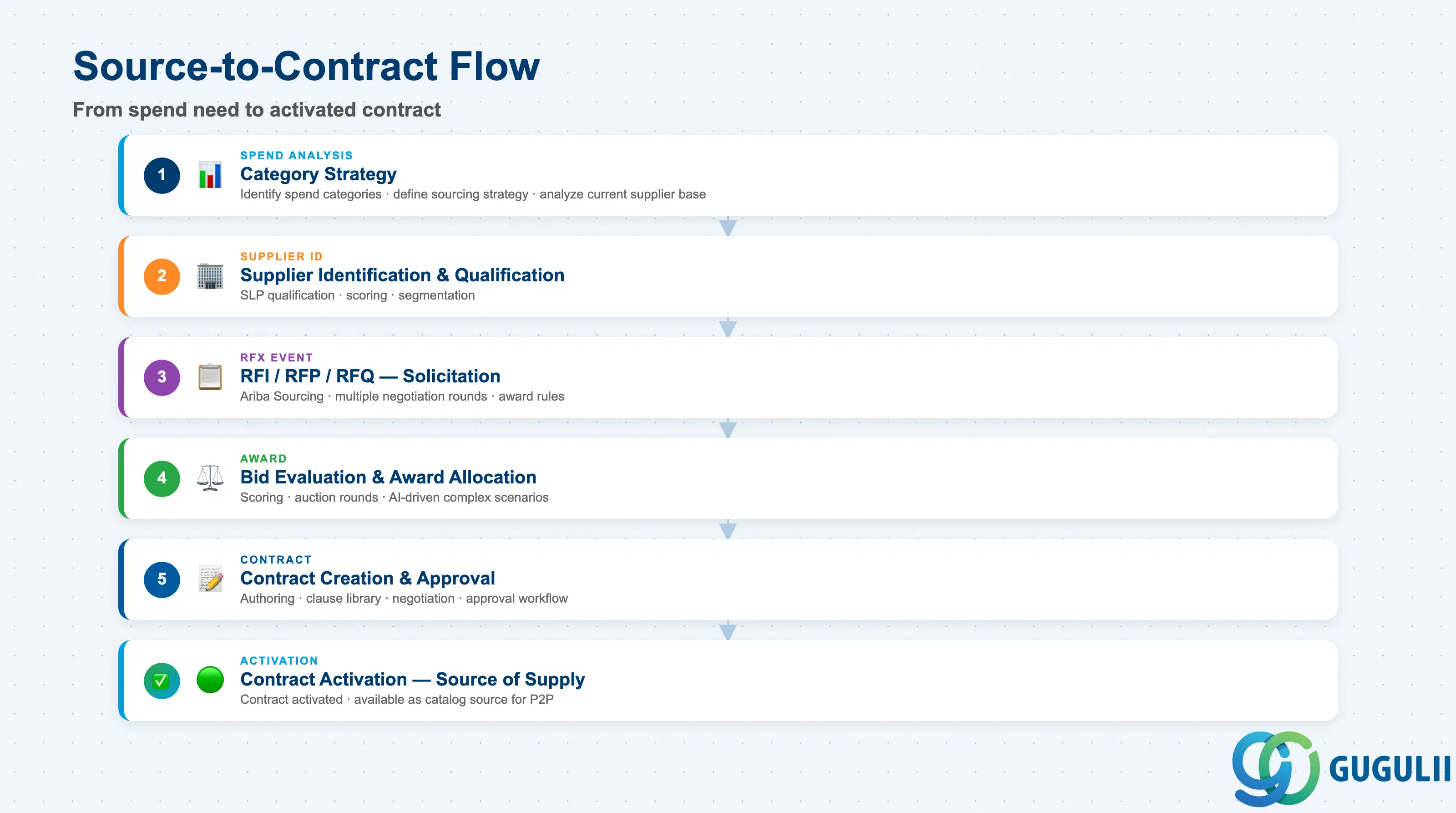
The S2C process transforms a raw spend need into an activated, executable contract:
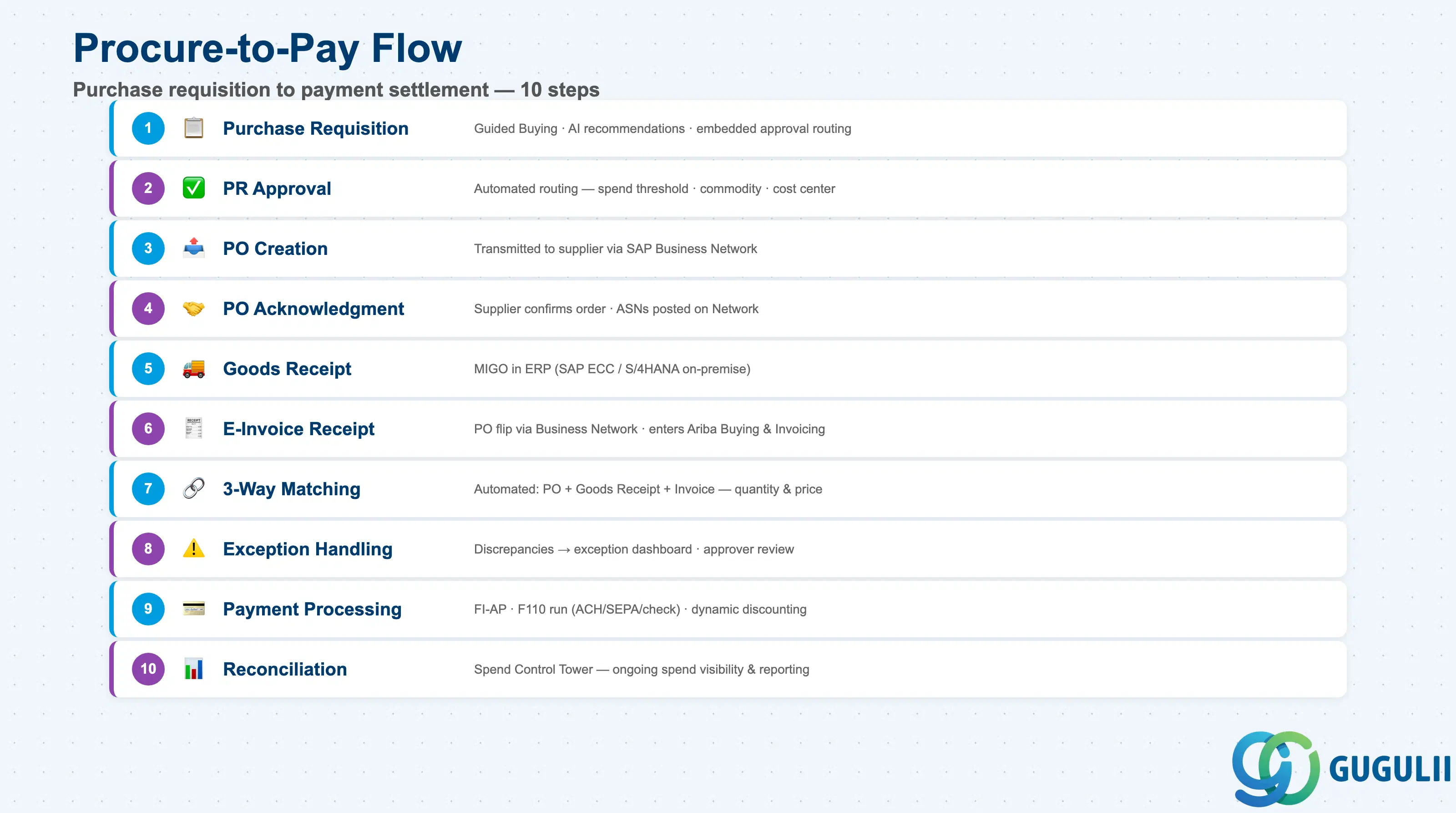
The P2P process begins from an activated contract or approved catalog:
The primary integration layer connecting SAP S/4HANA or SAP ECC on-premise to SAP Ariba is the Cloud Integration Gateway (CIG).
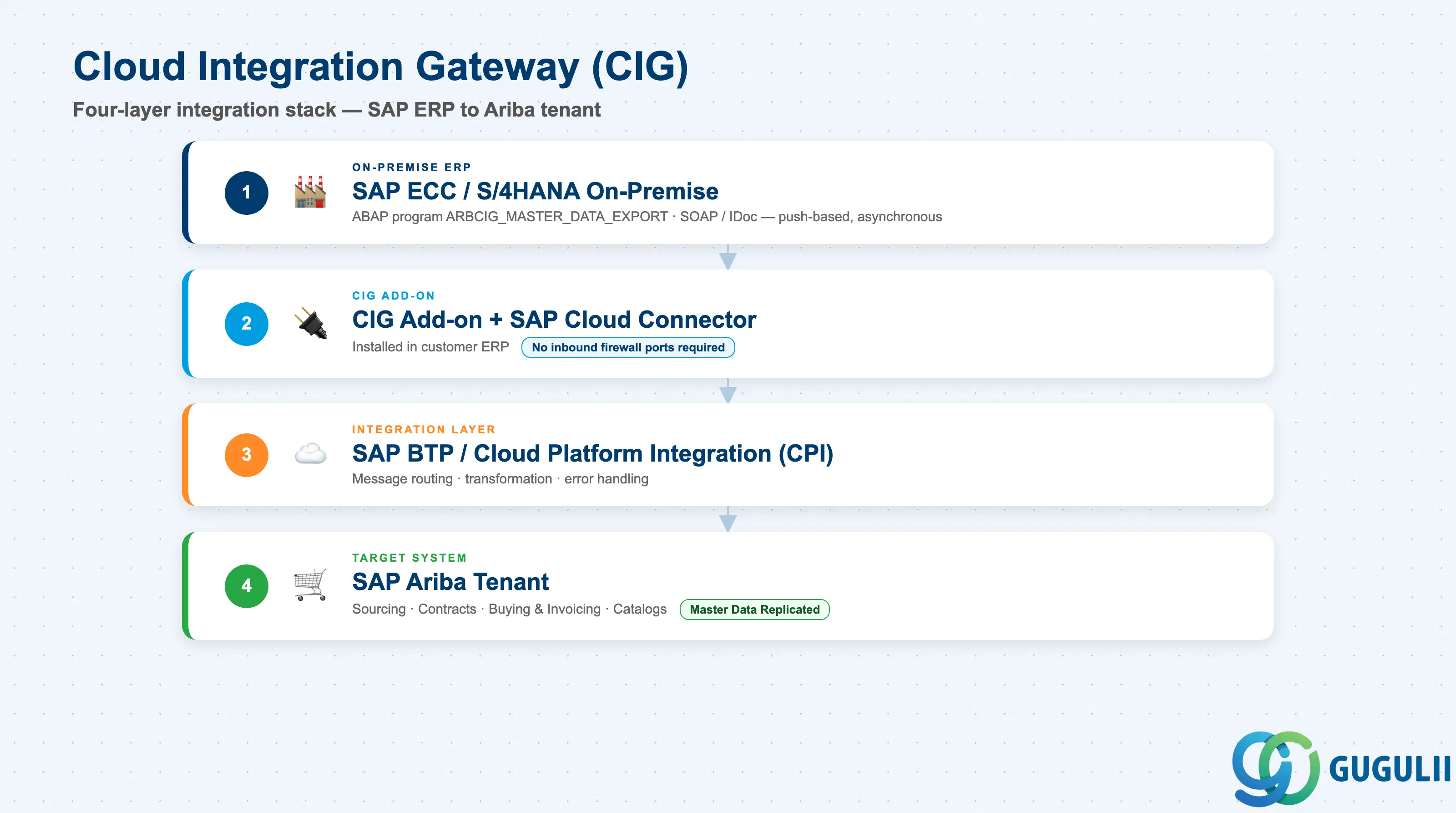
The integration stack consists of four layers:
SAP ECC / S/4HANA On-Premise
    ↓  (SOAP / IDoc — push-based, asynchronous)
CIG Add-on (installed in the ERP system)
    ↓  (Cloud Connector — no inbound firewall ports required)
SAP BTP / SAP Cloud Platform Integration (CPI)
    ↓
SAP Ariba Tenant
All messages flow in the outbound direction (ERP pushes to CIG); there is no pull mechanism. Integration uses SOAP or IDoc interfaces — no file-based channels for transactional data.
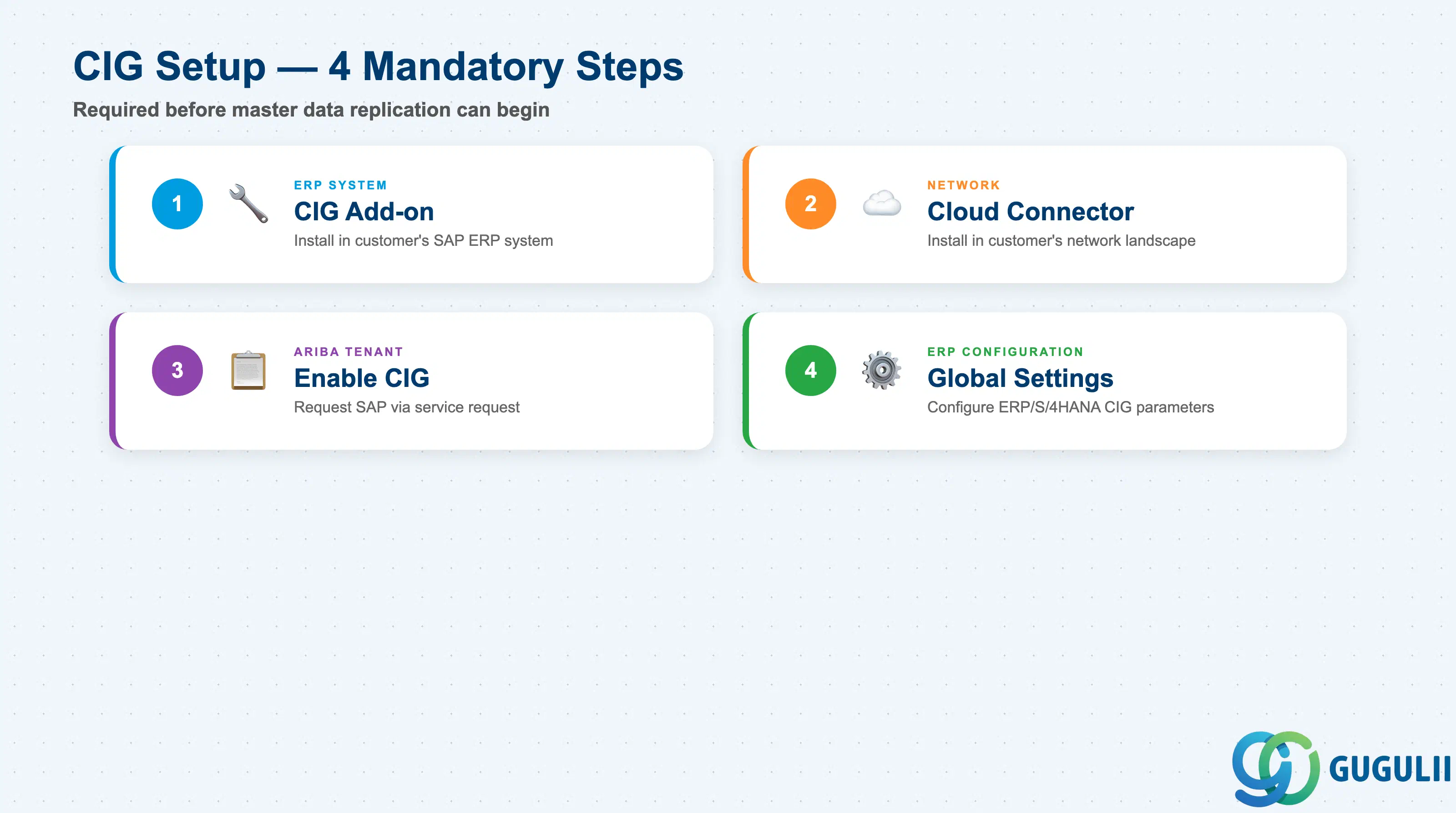
Four mandatory setup steps are required before CIG can replicate master data:
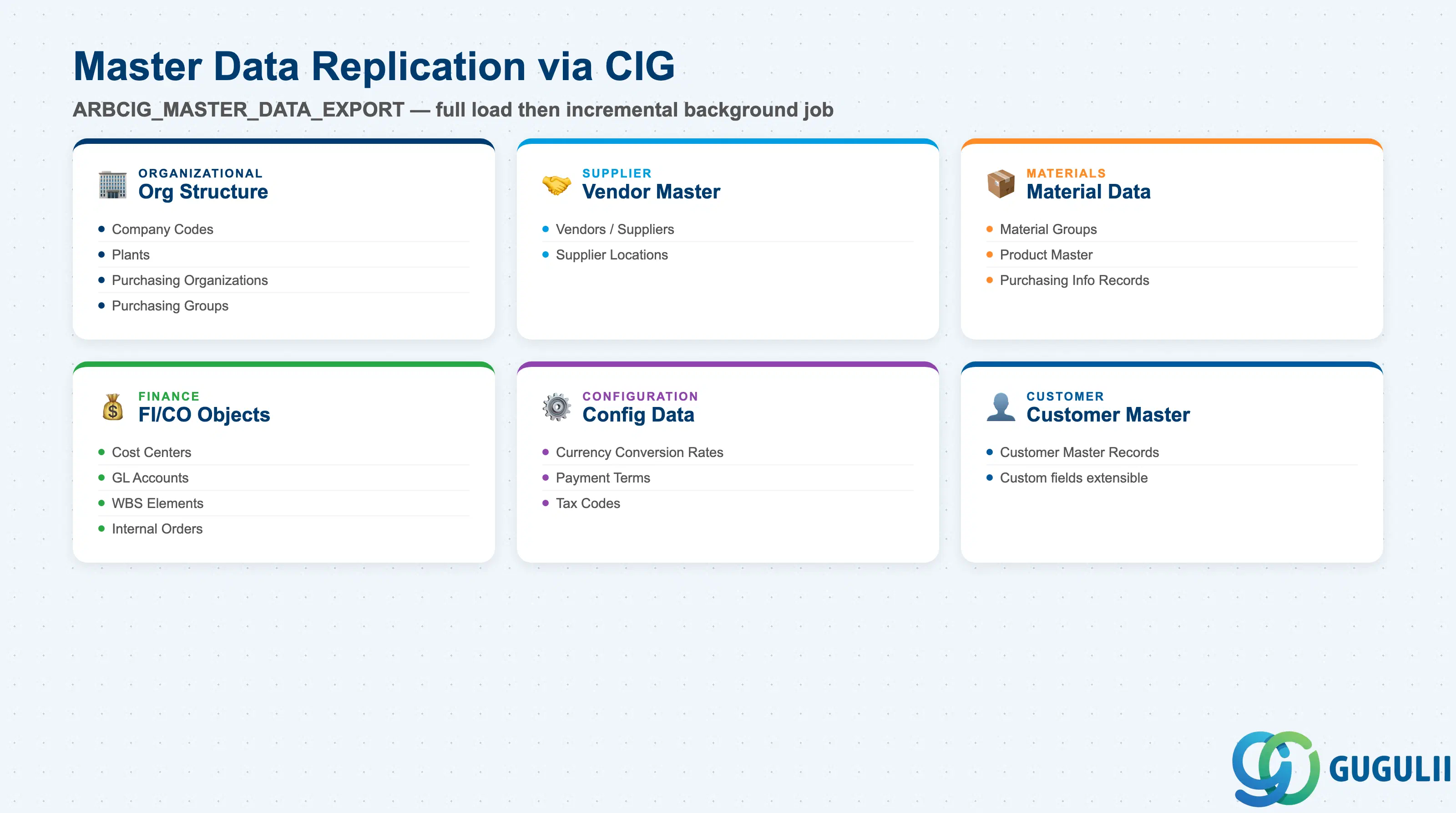
Master data is exported from SAP ERP using ABAP program ARBCIG_MASTER_DATA_EXPORT (transaction SE38). The first execution is a full load; subsequent executions are incremental and are scheduled as background jobs.
The program generates CSV files that are transmitted to the Ariba tenant via CIG web services. Master data objects replicated include:
| Category | Objects |
|---|---|
| Organizational | Company Codes, Plants, Purchasing Organizations, Purchasing Groups |
| Supplier | Vendors/Suppliers, Supplier Locations |
| Materials | Material Groups, Material/Product Master, Purchasing Info Records |
| Finance | Cost Centers, GL Accounts, WBS Elements, Asset Accounts, Internal Orders |
| Configuration | Currency Conversion Rates, Payment Terms, Tax Codes |
| Customer | Customer Master Records |
Custom fields from SAP ERP can be appended to the standard export program for additional attributes.
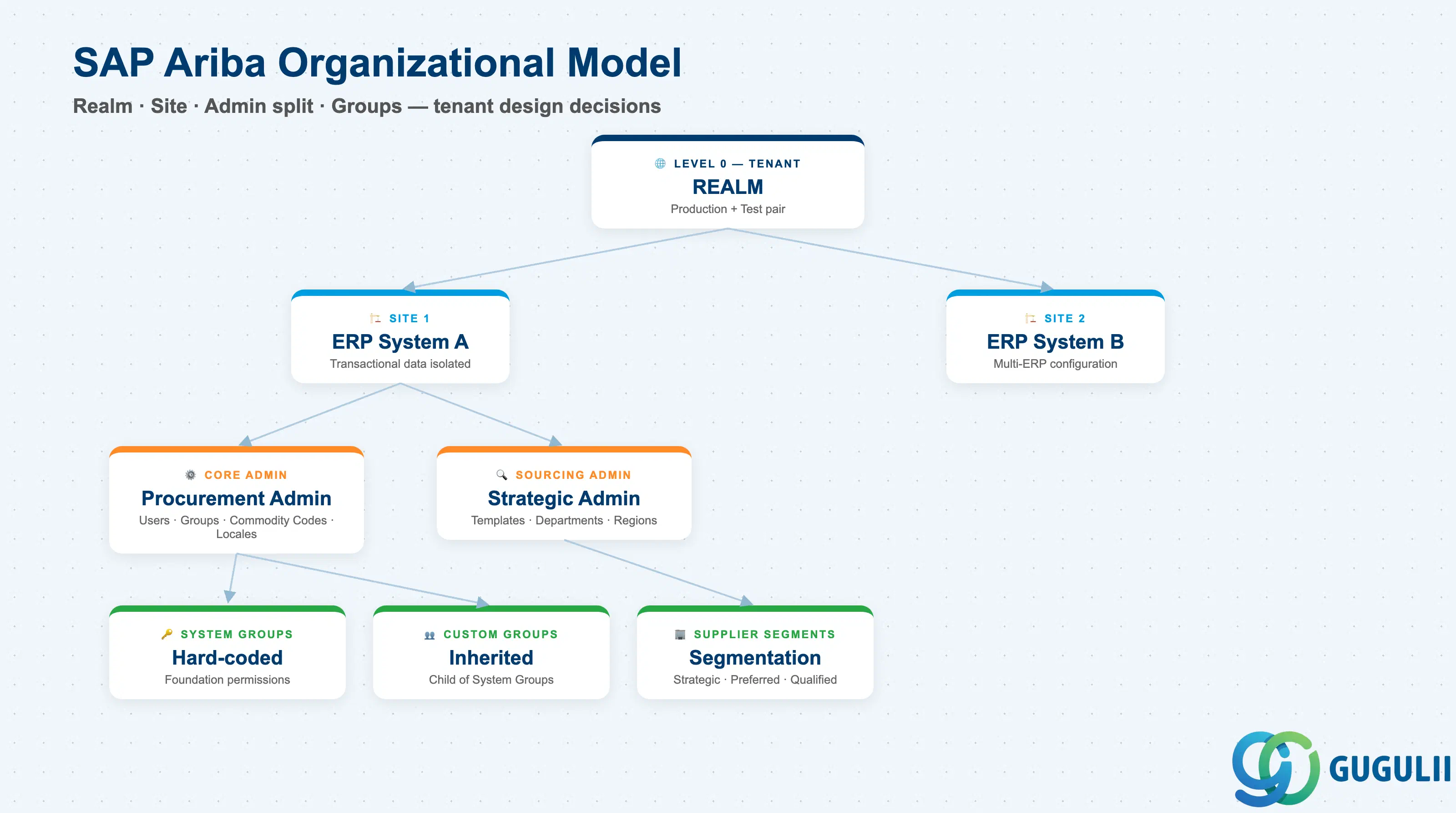
Understanding the SAP Ariba organizational model is essential for implementation design. Three key concepts govern how the tenant is structured:
A Realm is the SAP Ariba tenant instance — the top-level container for all data, users, and configuration. Every customer has two realms:
A Site is a sub-unit within a realm. Each site has its own web address and site name. In multi-ERP configurations, each site can be linked to a separate ERP system:
This model allows a global enterprise with multiple ERP systems to operate under a single Ariba realm while maintaining local transactional independence.
Realm administration is divided between two administrative interfaces:
| Interface | Scope |
|---|---|
| Core Administration (SAP Ariba Procurement) | Users, common supplier data, groups, commodity codes, unit of measure, currency rates, locales |
| Administration (Strategic Sourcing) | Reporting settings, departments, regions, event templates, SLP configuration data |
Groups control document routing, approval rules, and field/dashboard visibility. Two group types exist:
A user can belong to multiple groups. This inheritance model allows fine-grained access control without duplicating permission configurations.
Supplier groups segment suppliers for differentiated engagement and qualification workflows. A common segmentation model is:
| Segment | Description |
|---|---|
| Strategic Partners | High-spend, sole-source, or strategic relationship |
| Preferred Suppliers | Approved, performance-validated, contract in place |
| Qualified Bidders | Registered, qualification complete, eligible for RFx events |
| Prospective Suppliers | Under evaluation or onboarding |
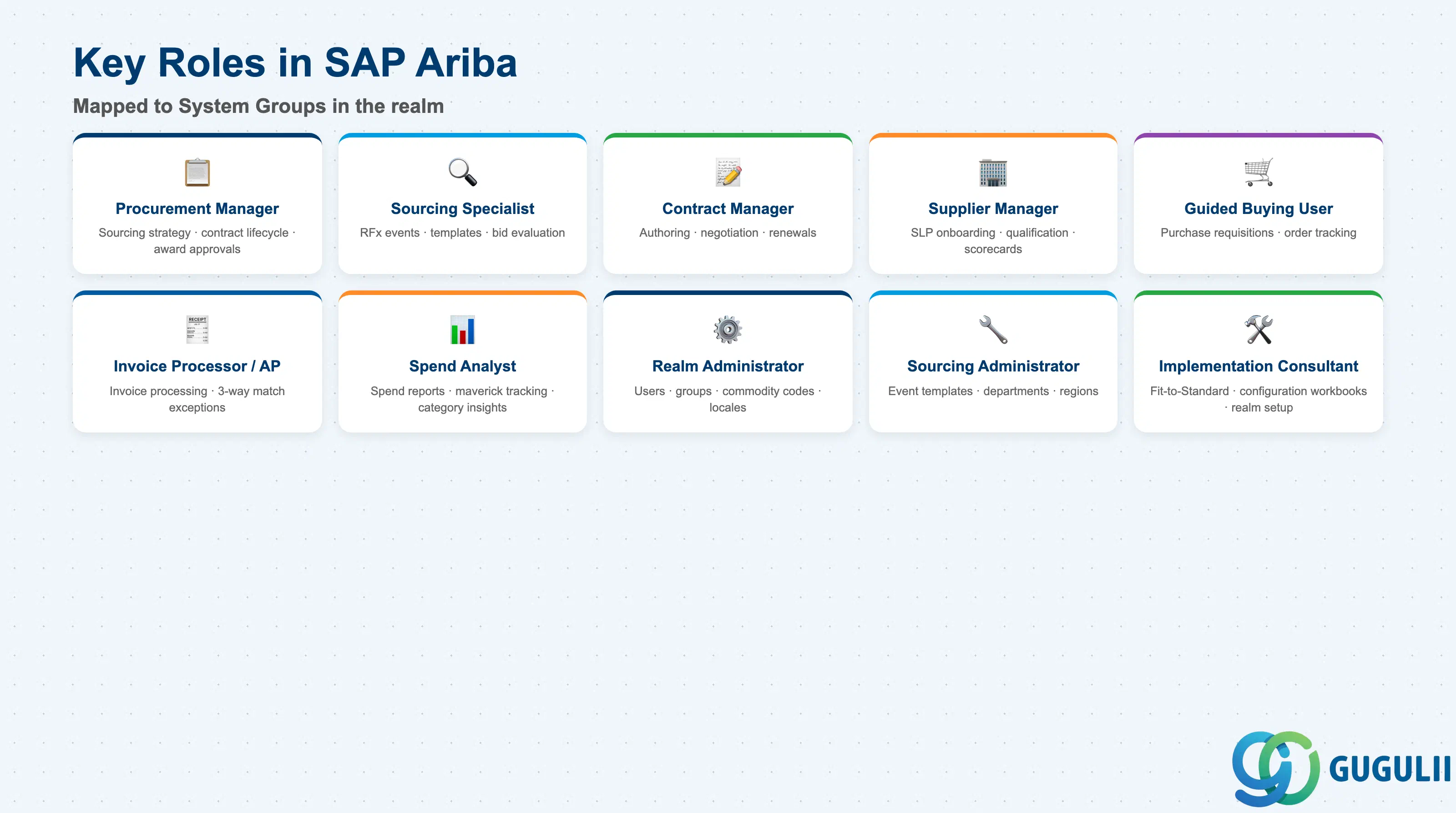
The following roles are typical in SAP Ariba implementations. Role assignments map to System Groups in the realm.
| Role | Primary Activities |
|---|---|
| Procurement Manager | Defines sourcing strategy; manages the RFx process; approves awards; owns contract lifecycle |
| Sourcing Specialist | Creates and manages RFx events; configures event rules and templates; evaluates bids |
| Contract Manager | Authors, negotiates, and manages contracts; monitors contract compliance and renewals |
| Supplier Manager | Manages supplier onboarding in SLP; runs qualification workflows; maintains scorecards |
| Guided Buying User (Requester) | Raises purchase requisitions via Guided Buying catalog; tracks order status |
| Invoice Processor / AP Specialist | Processes inbound invoices; resolves 3-way matching exceptions; manages AP posting |
| Spend Analyst | Runs spend analysis reports; monitors maverick and off-contract spend; produces category insights |
| Realm Administrator (Core Admin) | Manages users, groups, commodity codes, localization settings, and system configuration |
| Sourcing Administrator | Manages event templates, departments, regions, and strategic sourcing-specific configuration |
| Implementation Consultant | Leads Fit-to-Standard workshops; captures design decisions in configuration workbooks; configures and tests the realm |
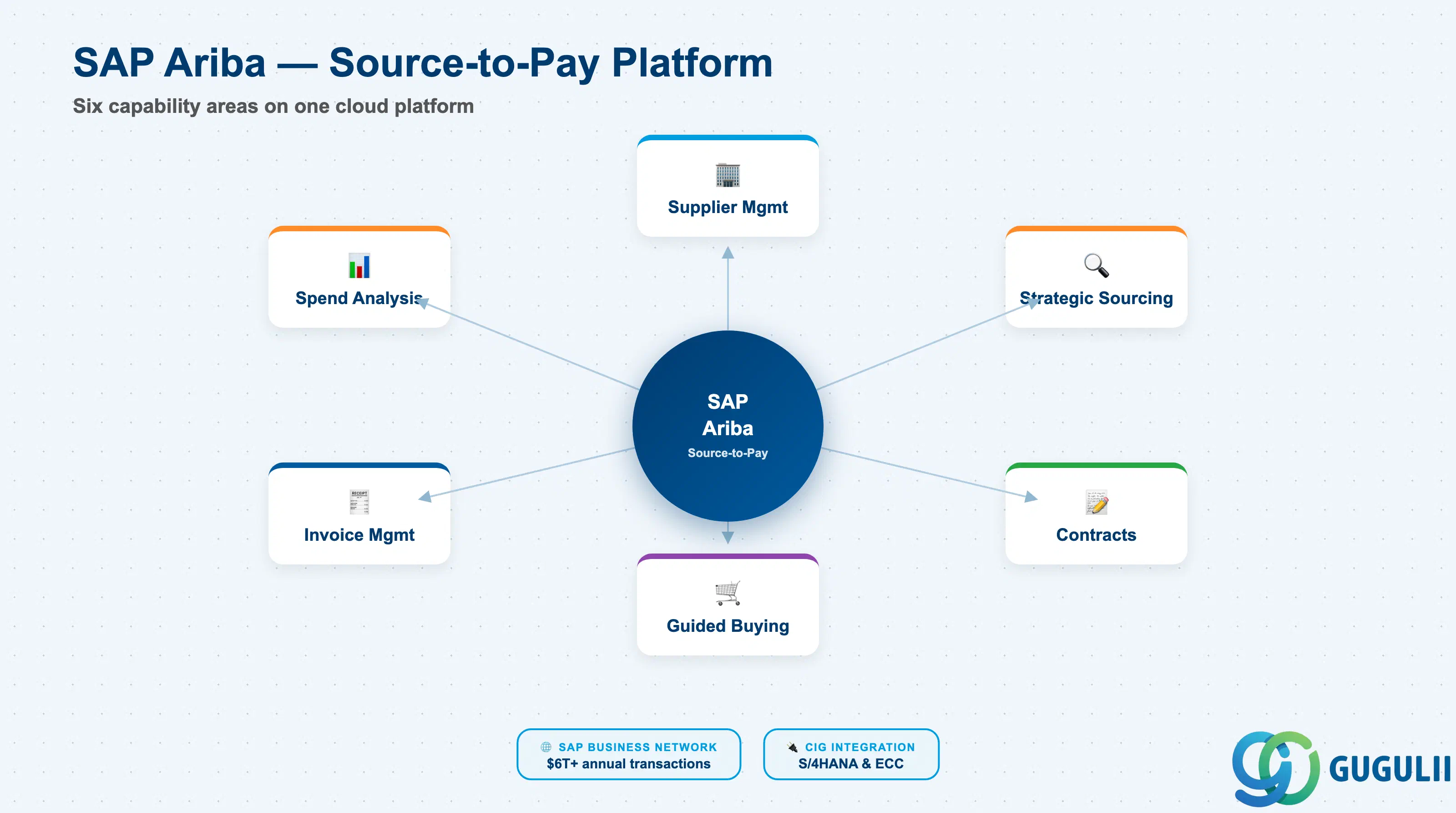
SAP Ariba is a comprehensive cloud-based spend management platform that covers the full source-to-pay lifecycle — from spend analysis and supplier qualification through sourcing events, contract management, and procure-to-pay execution. Its six capability areas (Supplier Management, Strategic Sourcing, Contracts, Guided Buying, Invoice Management, and Spend Analysis) address the entire procurement value chain, while SAP Business Network provides the B2B trading infrastructure that connects buyers and suppliers on a single platform processing over $6 trillion annually.
For SAP customers, the platform integrates tightly with SAP S/4HANA and SAP ECC via the Cloud Integration Gateway (CIG), enabling master data consistency across the on-premise and cloud procurement landscape. The organizational model — built around realms, sites, groups, and an administration split between procurement and strategic sourcing — provides the flexibility needed for global enterprises running multiple ERP systems under a single Ariba tenant. As SAP evolves the platform toward Next-Gen SAP Ariba on SAP BTP, AI capabilities such as Joule-assisted bid analysis, agentic invoice creation, and intelligent contract authoring are becoming central to the procurement experience.
| ID | Category | Title |
|---|---|---|
| ariba-001 | Overview | What is SAP Ariba? 📍 |
| ID | Category | Title |
|---|---|---|
| ariba-a01 | Overview | SAP Ariba Master Data: Overview, Hierarchy & Relationships |
| ariba-a02-01 | Master Data | SAP Ariba User |
| ariba-a02-02 | Master Data | SAP Ariba Role |
| ariba-a03-01 | Master Data | SAP Ariba Commodity |
| ariba-a04-02 | Master Data | SAP Ariba Catalog |
| ariba-a05-01 | Master Data | SAP Ariba Approval Rule |
| ariba-a06-01 | Master Data | SAP Ariba Integration Model |
| ID | Category | Title |
|---|---|---|
| ariba-b01 | Overview | SAP Ariba Transactions: Process Flow, Hierarchy & Relationships |