Title here
Summary here

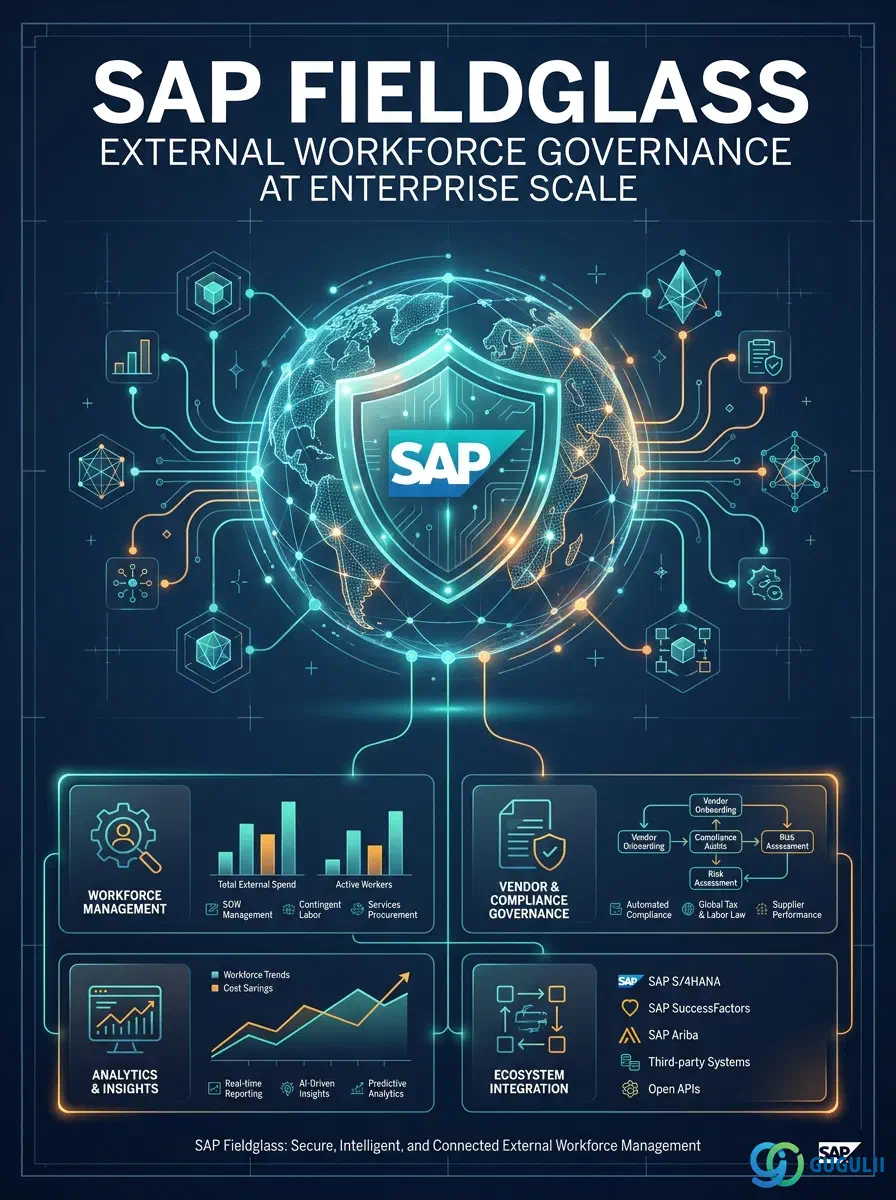
SAP Fieldglass is the system of record and control for every category of non-employee labor. Where SAP S/4HANA and SAP SuccessFactors govern your permanent workforce and procurement operations, Fieldglass fills the gap for the extended workforce — the contingent staff, freelancers, SOW vendors, and field service providers that increasingly make up a substantial portion of total labor spend.
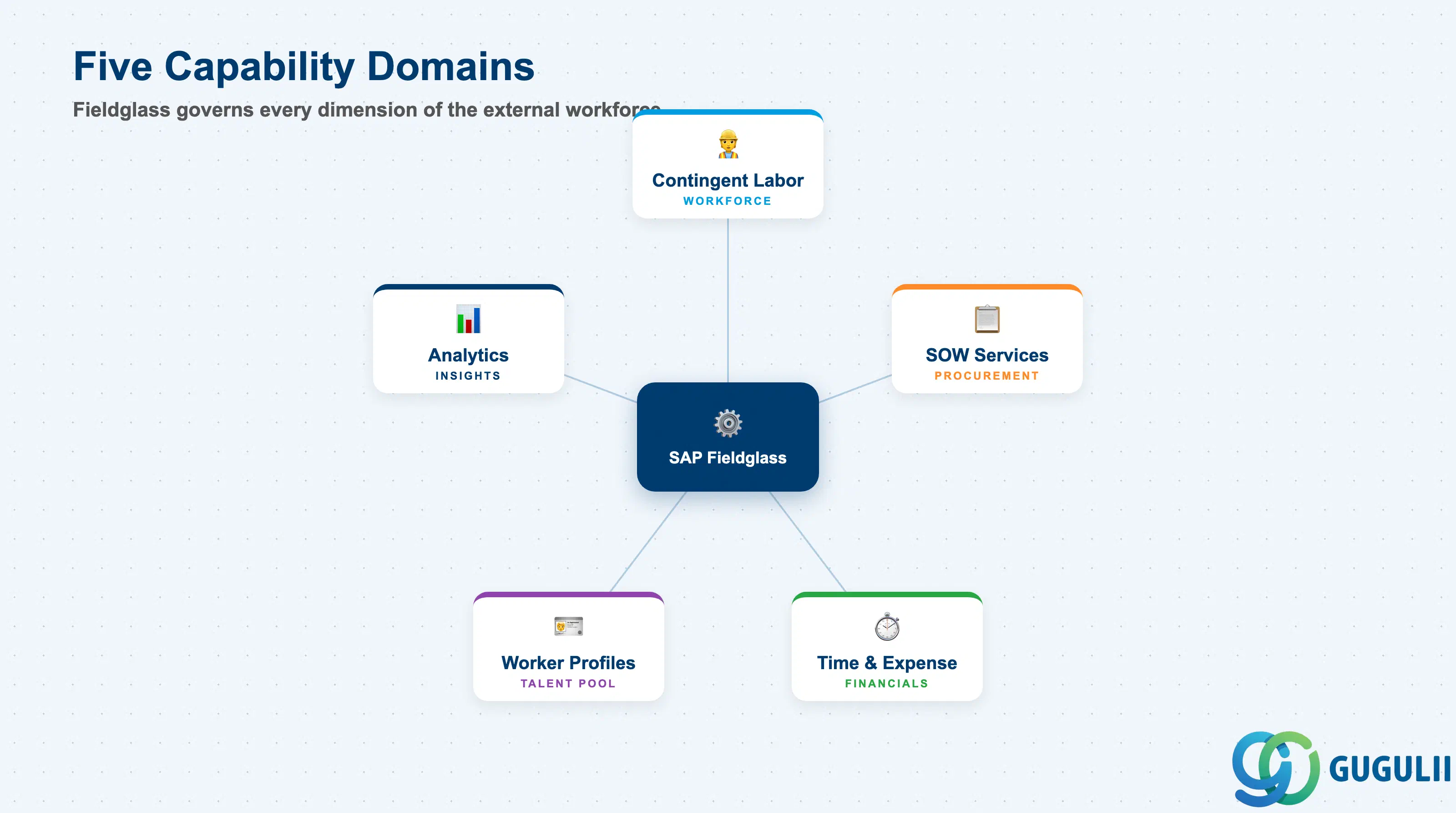
Acquired by SAP in 2014 and recognized by Ardent Partners as a consistent Market Leader, Fieldglass operates across five functional capability domains.
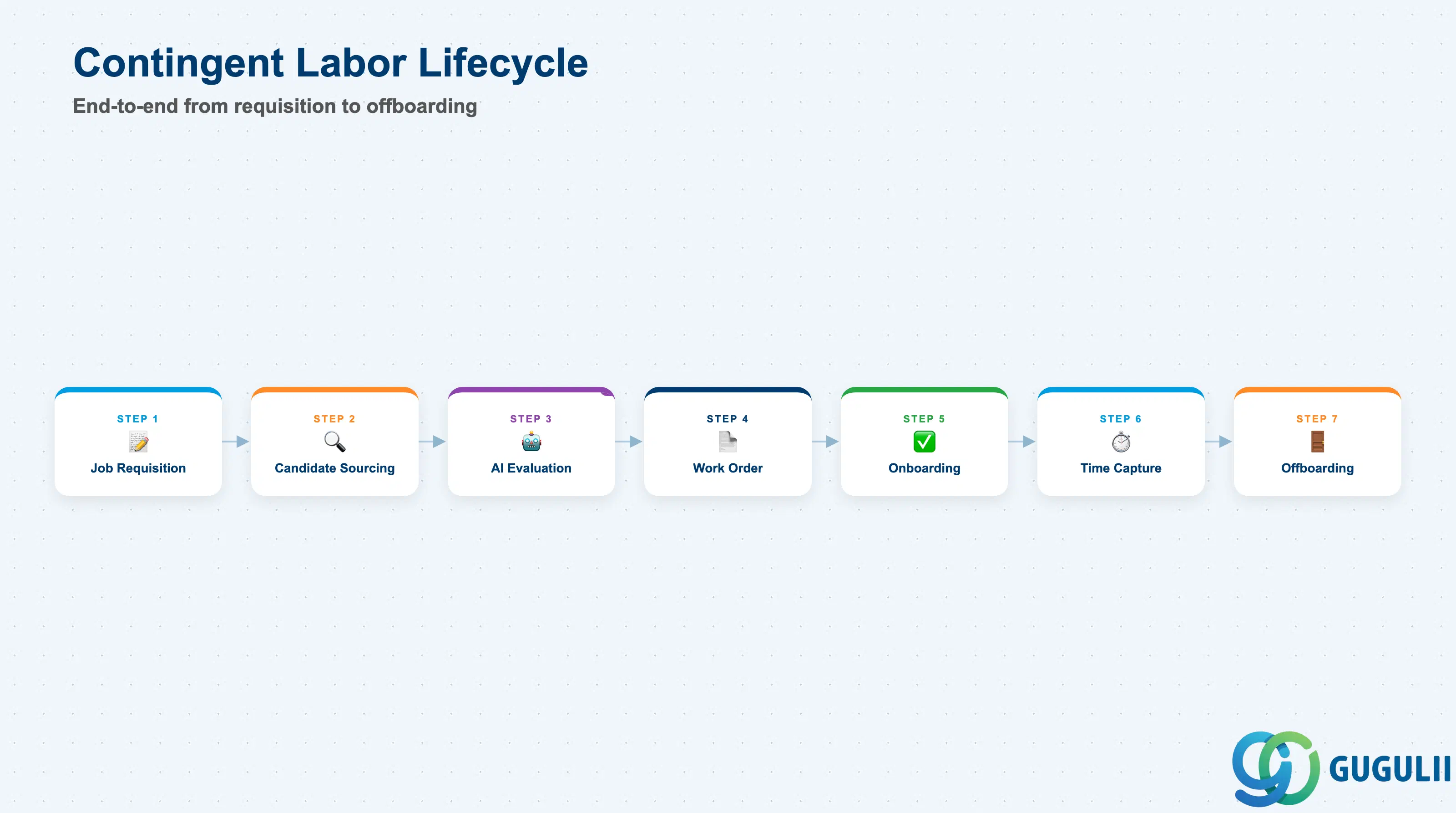
Contingent labor management is the foundational Fieldglass capability. It automates the end-to-end lifecycle for temporary workers and contract staff sourced from staffing agencies:
| Stage | Key Objects / Activities |
|---|---|
| Job Requisition | Job posting template, bill rate limit, required skills, work location |
| Candidate Sourcing | Distribution to preferred supplier list, candidate submission |
| Candidate Evaluation | AI-powered ranking by skills, salary preference, and experience |
| Work Order | Contractual engagement record linking worker, supplier, cost object, rate |
| Onboarding | Compliance checks, credential verification, facility access provisioning |
| Time Capture | Weekly time sheets submitted by worker, approved by manager |
| Offboarding | Access revocation, final time sheet, supplier invoice closure |
AI-powered candidate matching uses skills ontology models to rank submissions, while compliance rules enforce country-specific labor classification and regulatory requirements at the moment of requisition — rather than after the fact.
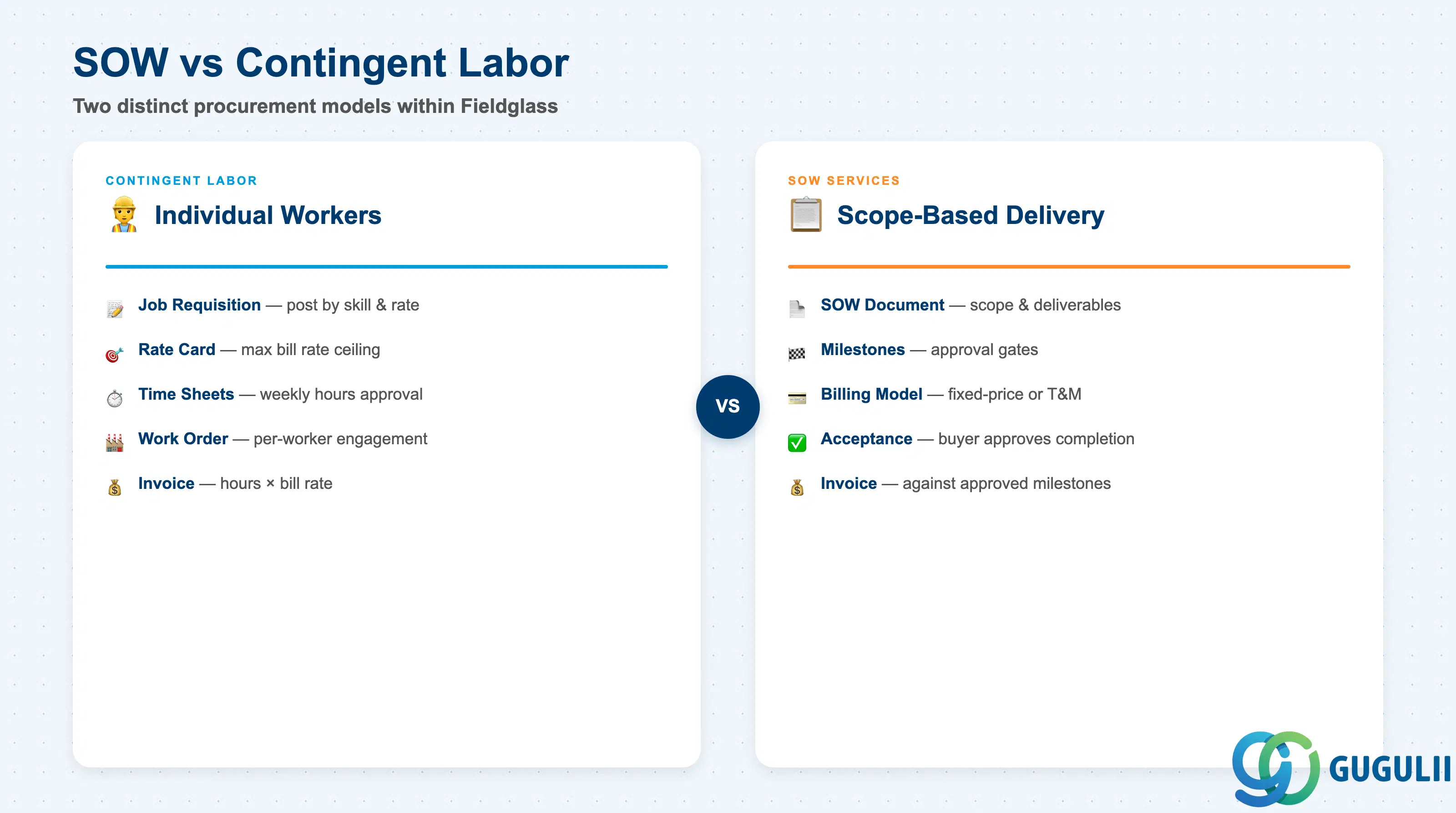
Statement-of-work (SOW) engagements differ fundamentally from contingent labor: a vendor delivers a defined scope rather than providing individually tracked workers. Fieldglass manages:
| Element | Description |
|---|---|
| SOW Document | Scope, deliverables, milestones, and acceptance criteria — created via Document AI generative assistance |
| Billing Model | Fixed-price milestone, deliverable-based, or time-and-materials (distinct from rate card model) |
| Milestone Approval | Buyer approves milestone completion before triggering invoice |
| SOW Invoice | Vendor submits invoice against approved milestones; flows to S/4HANA AP |
| Performance Tracking | Supplier evaluation dashboards track quality and delivery against SLA |
Ardent Partners specifically recognizes Fieldglass as an “Elite Performer” in SOW and Services Procurement, reflecting the sophistication of the milestone-and-deliverable approval model.
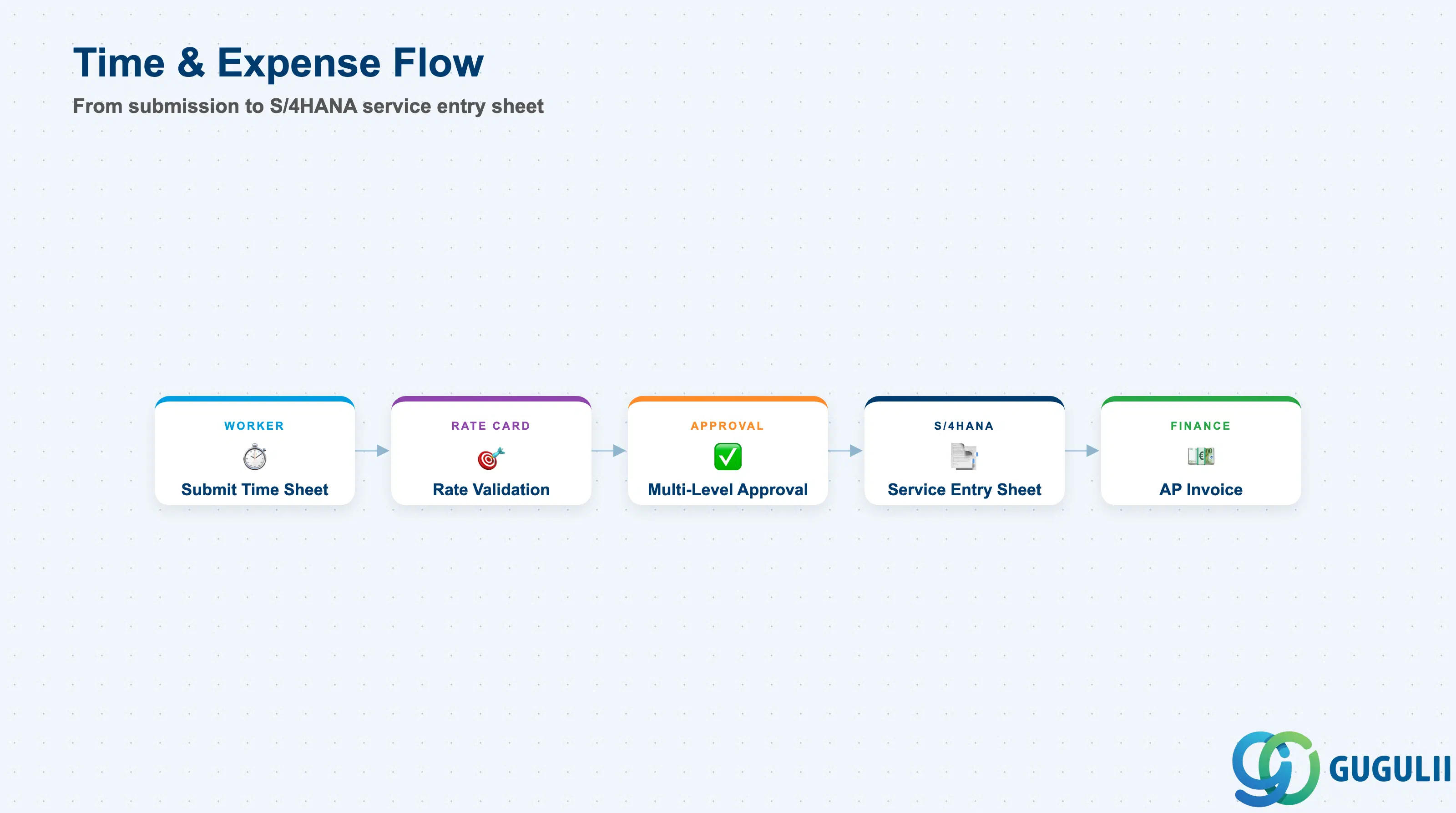
Worker time sheets and expense submissions flow through Fieldglass for structured approval before generating financial documents in S/4HANA:
| Object | Purpose |
|---|---|
| Time Sheet | Worker submits weekly hours per cost object (cost center, WBS element, internal order) |
| Expense Sheet | Worker submits expenses with receipt; approval triggers expense reimbursement |
| Approval Workflow | Configurable multi-level approval (manager, cost center owner, finance) |
| Rate Card | Defines maximum bill rates by job category, supplier, location, and currency |
| Service Entry Sheet | Generated in S/4HANA upon time sheet approval — confirms goods/services received |
Rate cards are a critical design element: they can be configured as hard ceilings (system rejects above-rate submissions) or soft guidance (requires override justification). Pay rate intelligence AI benchmarks configured rates against market data to support annual rate card refresh.
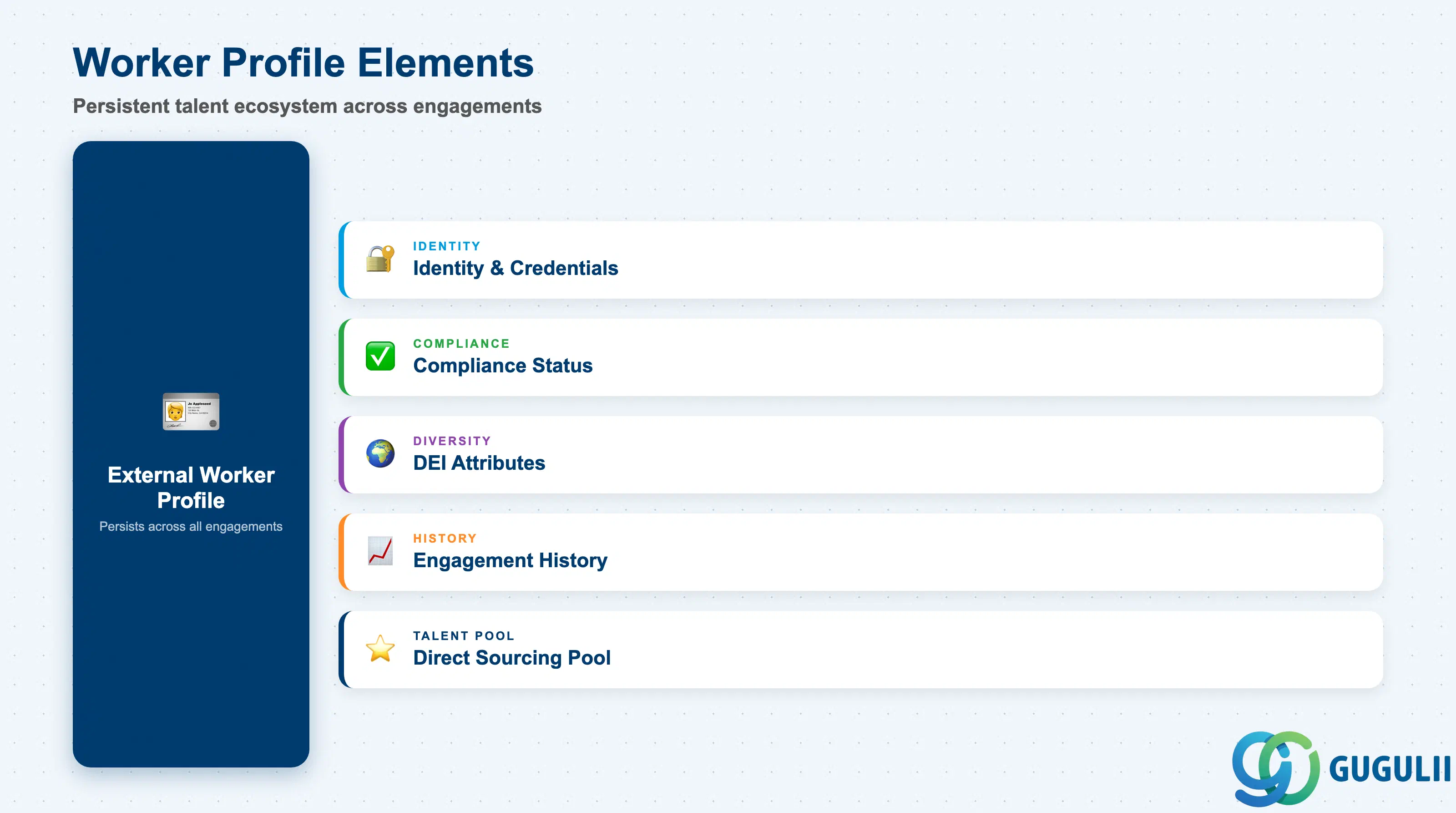
Each external worker in Fieldglass has a persistent profile that survives individual engagements — enabling a talent ecosystem approach where high-performing contractors can be re-engaged directly without re-running a full sourcing event:
| Profile Element | Purpose |
|---|---|
| Identity and Credentials | Name, contact details, certification records, security clearances |
| Compliance Status | Country-specific regulatory requirements, expiration tracking |
| DEI Attributes | Diversity metrics surfaced on DEI-focused dashboards |
| Engagement History | Track record across multiple work orders and suppliers |
| Direct Sourcing Pool | Internal talent cloud for re-engagement of known high performers |
Worker Profile data integrates with SAP SuccessFactors Talent Intelligence, allowing skills and performance data from Fieldglass engagements to inform permanent hiring decisions.
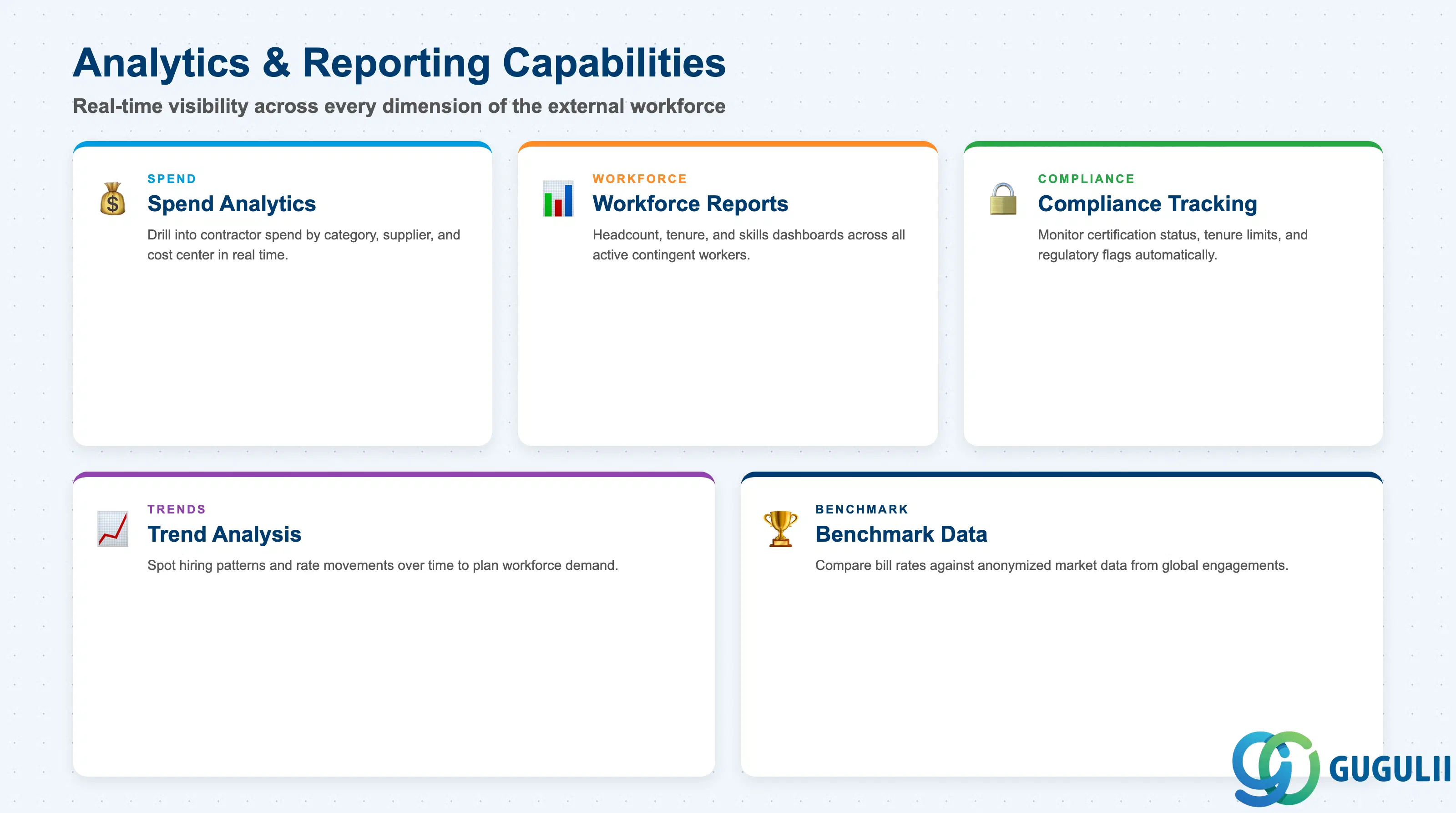
Fieldglass delivers real-time and historical analytics across the external workforce lifecycle through persona-based dashboards for procurement, HR, finance, and executive stakeholders:
| Capability | Description |
|---|---|
| Spend Analytics | Real-time visibility into contingent labor and SOW spend by supplier, category, cost center, and geography |
| Rate Benchmarking | Pay rate intelligence compares configured rates to market data for cost control |
| Supplier Performance | Delivery quality, fulfillment rate, and compliance scores per supplier |
| Workforce Visibility | SAP Build Work Zone provides a unified entry point surfacing data from Fieldglass and SuccessFactors |
| DEI Dashboards | Diversity composition of the external workforce across segments |
The analytics portfolio is designed for data-driven decisions at every stage of the talent lifecycle — from requisition rate setting through supplier rationalization.
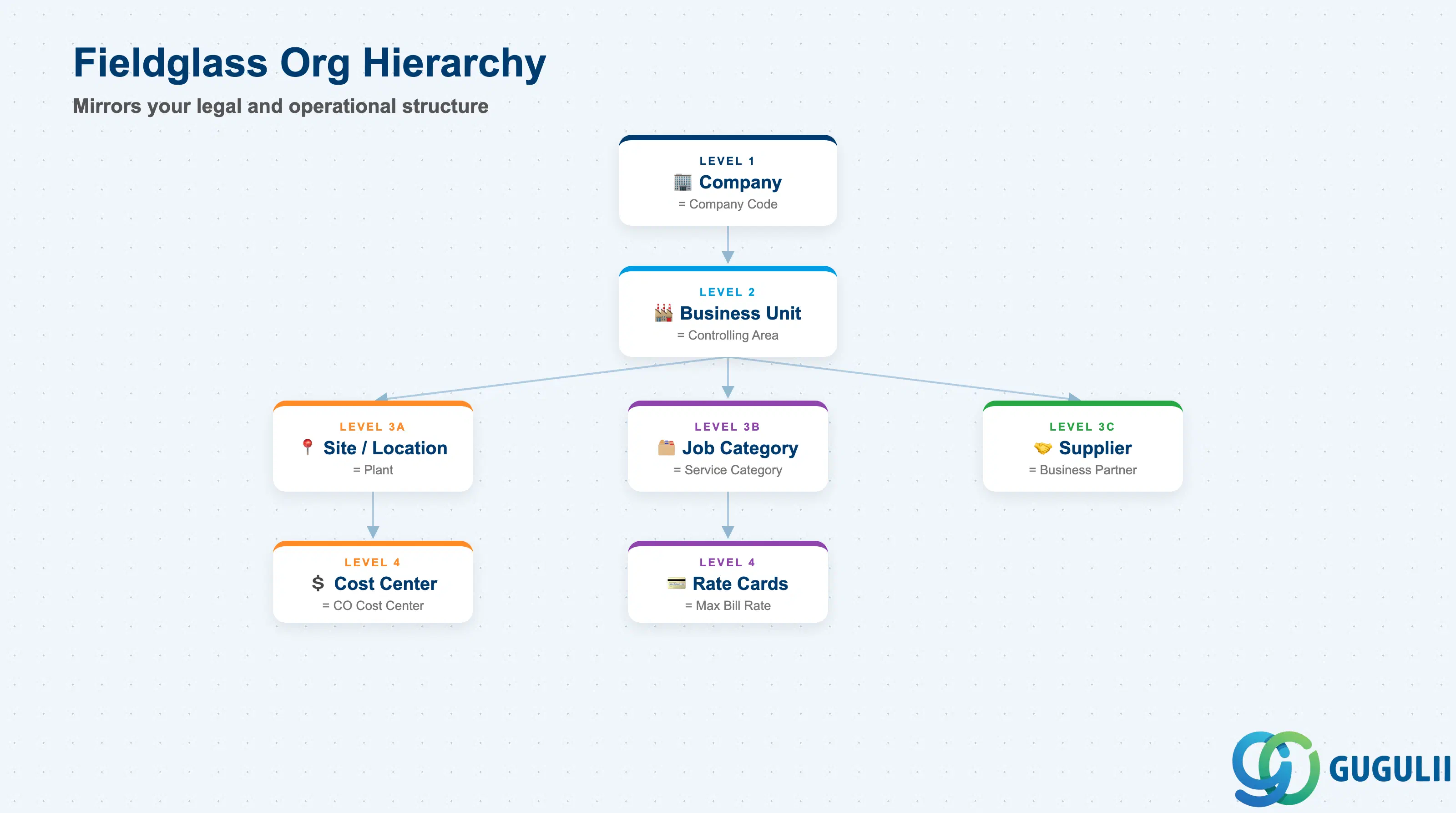
SAP Fieldglass structures the external workforce governance model around a hierarchy of organizational objects that mirror the buying organization’s legal and operational structure.
| Fieldglass Object | Purpose | S/4HANA Equivalent |
|---|---|---|
| Company | Top-level legal entity for the Fieldglass tenant | Company Code |
| Business Unit | Operational division; scopes requisitions and approvals | Controlling Area / Plant |
| Site / Work Location | Physical or virtual work location; determines rate card and compliance rules | Plant / Storage Location |
| Cost Center | Financial cost object assigned by worker for time reporting | Cost Center (MM-CO integration) |
| Job Category | Functional classification driving rate card lookup and candidate matching | Service entry category |
| Supplier | Staffing agency or SOW vendor; governs rate card, performance scores | Vendor (Business Partner) |
Company
└── Business Unit
    ├── Site (Work Location)
    │   └── Cost Center(s)
    ├── Job Categories
    │   └── Rate Cards (Supplier × Job × Location × Currency)
    └── Suppliers (Preferred Supplier List)
Key organizational design decisions:
Design Decision: Business Unit granularity determines the scope of reporting, approval routing, and rate card segmentation. Defining Business Units too narrowly creates maintenance overhead; too broadly prevents meaningful spend analysis by operational division.
Design Decision: Site configuration drives compliance rule inheritance. Country-specific labor regulations (co-employment rules, classification thresholds, maximum engagement durations) are attached at the Site level. Multi-country deployments require careful Site-to-country mapping reviewed by legal counsel.
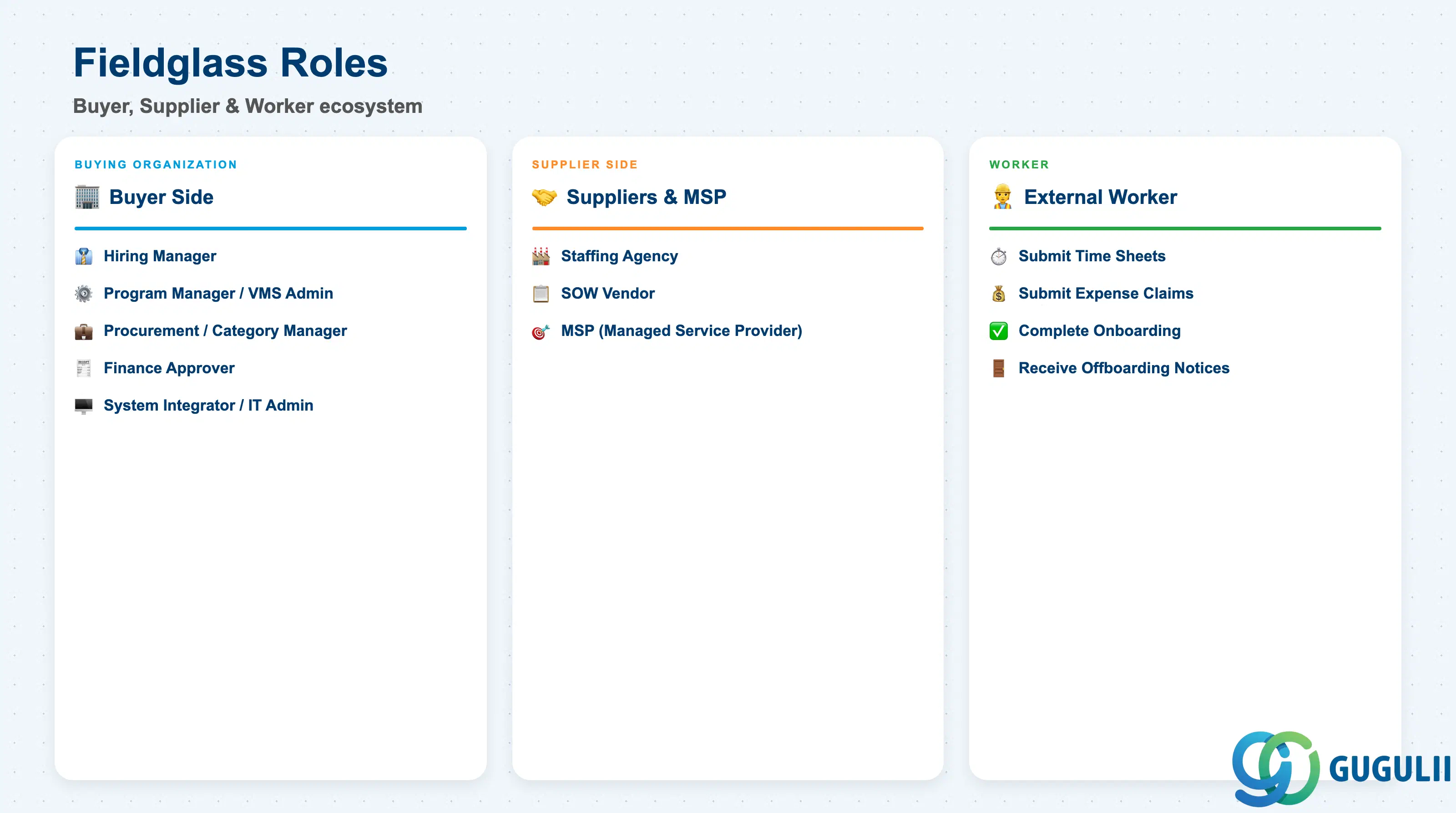
SAP Fieldglass supports a structured set of roles spanning the buying organization, staffing suppliers, and managed service providers (MSPs).
| Role | Primary Activities |
|---|---|
| Hiring Manager | Creates and submits job requisitions; reviews and selects candidates; approves time sheets and milestone completions |
| Program Manager / VMS Admin | Configures templates, rate cards, and approval workflows; manages preferred supplier lists; monitors compliance dashboards |
| Procurement / Category Manager | Designs sourcing strategy, runs supplier negotiations, sets rate card ceilings, analyzes spend reports |
| Finance Approver | Validates cost object assignments, approves invoices, reconciles Fieldglass charges against S/4HANA AP postings |
| Supplier (Staffing Agency) | Submits candidates, manages worker records, submits time sheets and invoices via Fieldglass Supplier Portal |
| SOW Vendor | Submits milestone completion evidence, raises SOW invoices, receives payment notifications |
| MSP (Managed Service Provider) | Operates the VMS program on behalf of the buying organization; manages supplier relationships and SLA performance |
| Worker (Contractor) | Submits time sheets and expense claims; completes onboarding requirements; receives work order and offboarding notifications |
| System Integrator / IT Admin | Manages integration configuration between Fieldglass, S/4HANA, Ariba, and SuccessFactors; maintains user provisioning |
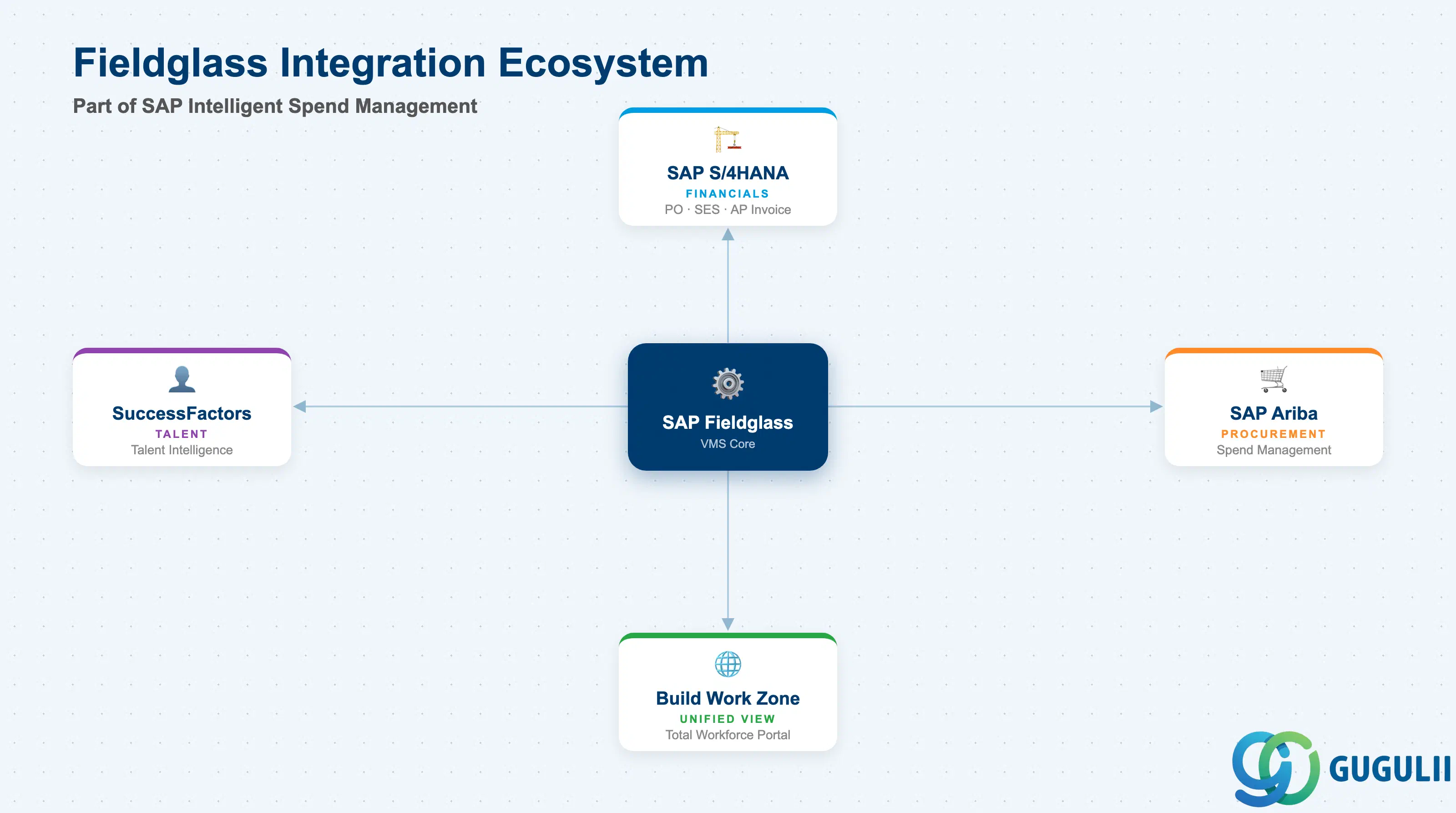
SAP Fieldglass is purpose-built to solve the governance gap that exists when large organizations rely heavily on non-employee labor. Without a dedicated VMS, contingent spend is typically fragmented across HR systems, purchasing systems, and spreadsheets — creating co-employment risk, rate inconsistency, and near-total spend invisibility. Fieldglass addresses all three dimensions: it enforces rate cards and compliance rules at the moment of requisition, creates a structured approval chain from requisition through invoice, and surfaces spend and workforce composition data in real time.
Its position within SAP’s Intelligent Spend Management portfolio means it is not a standalone tool. Fieldglass connects S/4HANA financial commitments (purchase orders, service entry sheets, AP invoices) to the operational workforce program, and connects SuccessFactors permanent workforce data to a unified view of all workers through SAP Build Work Zone. For organizations already running SAP, this integration depth is the primary differentiator versus standalone VMS vendors.
The next article in this series — FG-002: Business Processes & Integration — covers the end-to-end transaction flows (contingent labor requisition-to-payment, SOW lifecycle, offboarding), integration architecture with S/4HANA and Ariba, and the key design decisions that shape a Fieldglass implementation program.
| ID | Category | Title |
|---|---|---|
| fg-001 | Overview | What is SAP Fieldglass? 📍 |
| ID | Category | Title |
|---|---|---|
| fg-a01 | Overview | SAP Fieldglass Master Data: Overview, Hierarchy & Relationships |
| fg-a02-01 | Master Data | SAP Fieldglass Site |
| fg-a02-02 | Master Data | SAP Fieldglass Location |
| fg-a02-03 | Master Data | SAP Fieldglass Business Unit |
| fg-a02-04 | Master Data | SAP Fieldglass Cost Center |
| fg-a03-01 | Master Data | SAP Fieldglass User Role |
| fg-a03-02 | Master Data | SAP Fieldglass User |
| fg-a03-03 | Master Data | SAP Fieldglass Approval Group |
| fg-a03-04 | Master Data | SAP Fieldglass Distribution List |
| fg-a04-01 | Master Data | SAP Fieldglass Rate Category |
| fg-a04-02 | Master Data | SAP Fieldglass Rate Grid |
| fg-a04-03 | Master Data | SAP Fieldglass Contingent Type |
| fg-a04-04 | Master Data | SAP Fieldglass SOW Template |
| fg-a05-01 | Master Data | SAP Fieldglass MSP Company |
| fg-a05-02 | Master Data | SAP Fieldglass Certification |
| ID | Category | Title |
|---|---|---|
| fg-b01 | Overview | SAP Fieldglass Transactions: Process Flow, Hierarchy & Relationships |